
 Posts
Posts


September 30, 2006
This is not meant to scare visitors away from Nicaragua. Outside of the capital, Nicaragua is filled with splendid greenery, culture, natural and historic places.
But Managua is not a pleasant place and I advise skipping it if possible. If you absolutely must spend time in Managua, then be very careful when choosing your transportation.
I’m writing about taxis because I was assaulted and robbed in a taxi yesterday. But knife-point robberies are said to occur on buses.
The typical Nicaraguan taxi picks up more than one passenger at a time. Whoever gets in second or third may have to go out of their way before reaching their destination, but the price is correspondingly reduced.
Yesterday I got into a taxi that already had a passenger in the front. The man was counting his money and, I assumed, preparing to pay and get out soon. I sat alone in back, behind the driver, where I (mistakenly) felt more safe. After we started off, the driver locked the door behind the passenger, which I thought was strange, but figured he must be doing it for safety. Robbers have been known to enter cars, especially when stopped at stoplights. My door, however, remained unlocked.
Not long afterwards, and with incredible speed, the passenger jumped back on top of me and began punching me in the head. He pulled my shirt over my face to keep me from seeing and I found myself in total blackness, trapped in a car with two strange men, and being beaten. The second I saw him flying towards me with a grunt, I began to scream, a loud, insistent, instinctual scream of terror. Not knowing what they would do to me, nor if I would even survive, I was truly terrified.
He yelled at me to shut up and beat me harder. I remembered my unlocked door and tried to find and reach the handle in the blackness, but he’d trapped my left arm and I couldn’t move.
He began to ask what I had – how many dollars, cordobas, did I have a cellular phone. I had all that – plus more – a camera, an ipod, an electronic dictionary, souvenirs, a backpack. And I was unusually loaded, as I’d planned to treat my colleagues to dinner that night and needed to change money for my upcoming travels.
At this point, it seemed their main motive was robbery which was a comparative relief. I’d give them everything to not touch me or to take my life. I told them, from under my shirt and under the weight of his body what I had – begged them to take it all, to let me out.
It became clear the robber and driver were a team. They told me they were taking me outside the city, said I needed to keep quiet and cooperate if I didn’t want to be killed.
The robber, who said he was from El Salvador, and asked where I worked, gave the driver directions. He also said, to my relief, that my body didn’t interest him. The driver gave the robber instructions – Take her shoes.
He pulled off my shoes and my watch, felt for rings or necklaces, felt for money hidden elsewhere on my body. I understood they would probably clean me dry, then dump me somewhere. I imagined a remote rural area, a dangerous barrio. I imaged they’d roll me out while moving at full speed and again the terror intensified. I asked them to please stop before pushing me out.
They did slow to a near stop and did push me out onto the road. I was barefoot, my shirt over my head, shaking and disoriented. I had nothing but 10 pesos (about 50 cents) I happened to be holding in my right hand.
When I staggered up to a security guard watering the lawn, he told me where I was. Luckily, it was a decent area. And luckily, I came across the guard first, because the next figure I saw was a guy walking down the street with a baton.
I told the guard what happened and he helped me to get another taxi. He told me when he’d first seen me walking towards him, he’d thought I was crazy.
I had no money, no key to my home, no cell phone, and no ones numbers memorized. If I hadn’t been on my way to meet colleagues for dinner, I don’t know what I would have done. Since they were waiting for me, I was able to take a taxi to them, ask them to pay for the taxi, and ask for their help in canceling my credit card, getting shelter, etc.
In summary, it was a frightening and miserable experience. When in Managua, it’s preferable to have a car and driver. If that’ s not possible, ask anyone you know there for names and numbers of known, trustworthy drivers. Or, use only radio-controlled taxis offered by a reputable hotel – which will cost more, but are reliable. Barring any of that, never get in a cab in Managua with other passengers, and tell the driver you want express service (which will cost a little more). This means he can’t pick up other passengers while you are in the car.
Ideally, especially if you are alone, it’s good for someone to walk you to the taxi and to note the car number. In case of last resort, choose cars only with the newest taxi plates (3 horizontal stripes) and note the taxi number before getting in.
The risk is real and for your health and safety, Managua is a city in which one must take precautions.
Wednesday, October 18, 2006


Another period without photos
September 29, 2006
Due to a robbery in a taxi on this day, I lost the blog entries I was preparing, as well as my camera. So I no longer have anything to post about my very interesting visit to the rural, mountainous, Rio Blanco, my motorcycle-ride, horseback-ride and hike up to visit a remote cattle farmer, or the fun evening birthday celebration a local employee invited me to for his daughter.
I’ll also be without photos, until I’m able to replace the camera. Two cameras lost in two months. I’m not batting very well.
Due to a robbery in a taxi on this day, I lost the blog entries I was preparing, as well as my camera. So I no longer have anything to post about my very interesting visit to the rural, mountainous, Rio Blanco, my motorcycle-ride, horseback-ride and hike up to visit a remote cattle farmer, or the fun evening birthday celebration a local employee invited me to for his daughter.
I’ll also be without photos, until I’m able to replace the camera. Two cameras lost in two months. I’m not batting very well.
Typical Nicaragua

September 17, 2006
I returned to Nicaragua after a weekend away and immediately felt right back at home. The taxi driver I had asked to pick me up at the airport didn’t seem to be there. I found another (who was very responsible and nice). But, typically, he had to stop at the gas station on the way. Managua drivers, rather than putting their fares into gas, drive on empty and seem to put in only enough to get themselves to the destination of their current order. I’m not sure why this is (lack of funds, fear of gas theft?) but I should ask.
At the gas station, I went into the mini-mart to buy some milk. On my way out, a large white truck suddenly revved up and roared backwards. An empty beer bottle fell out of the cab and crashed against the concrete. I just missed being hit. My taxi driver, Jose, looked on open mouths. He refused to move until the truck left.
“Look,” he said, as the female driver got out, giggling and swaying and moved back into the cab. Her male companion took the wheel, holding a half empty bottle of Corona in one hand, staggering as he gripped the wheel and climbed into the cab. “They are drunk. It’s very dangerous.”
We watched the driver take another drink, hanging on to his open bottle. He looked through the window with rolling eyes.
“Isn’t anyone going to stop him?” I asked.
No. Jose said that if the police saw him, they’d stop him. “But there are few police in the city. So they usually come on duty at midnight. At 9 p.m., there were neither police, nor pedestrians, on the streets.
The white truck pulled out into the fast lane into town, accompanied by a minivan that Jose said was also driven by a drunk driver. If they want to risk their own lives, I say go ahead. But what I found unfortunate is that cars, pedestrians and bicycles would all be hostage to those giant vehicles, liable to spin out of control at any time left. If any one died, it would most likely be an innocent.
Also, typically for Managua, a light evening rain fell, and the lights were out, leading us to drive down black streets.
I asked Jose if the lack of electricity was seasonal.
“It’s only been a problem this year,” he said. “Before, we had enough.”
I felt fortune smiled upon me when I found electricity working in my apartment, leading me to not mind the lack of water so much.
Promising Exports
September 14, 2006
In 2005, Nicaraguan exports were $857.9 million, a 45-year high. Nicaragua had $600 million in the late 1970s. Exports then plummeted, as the country went through turmoil and war, not reaching the same level again until 2000.
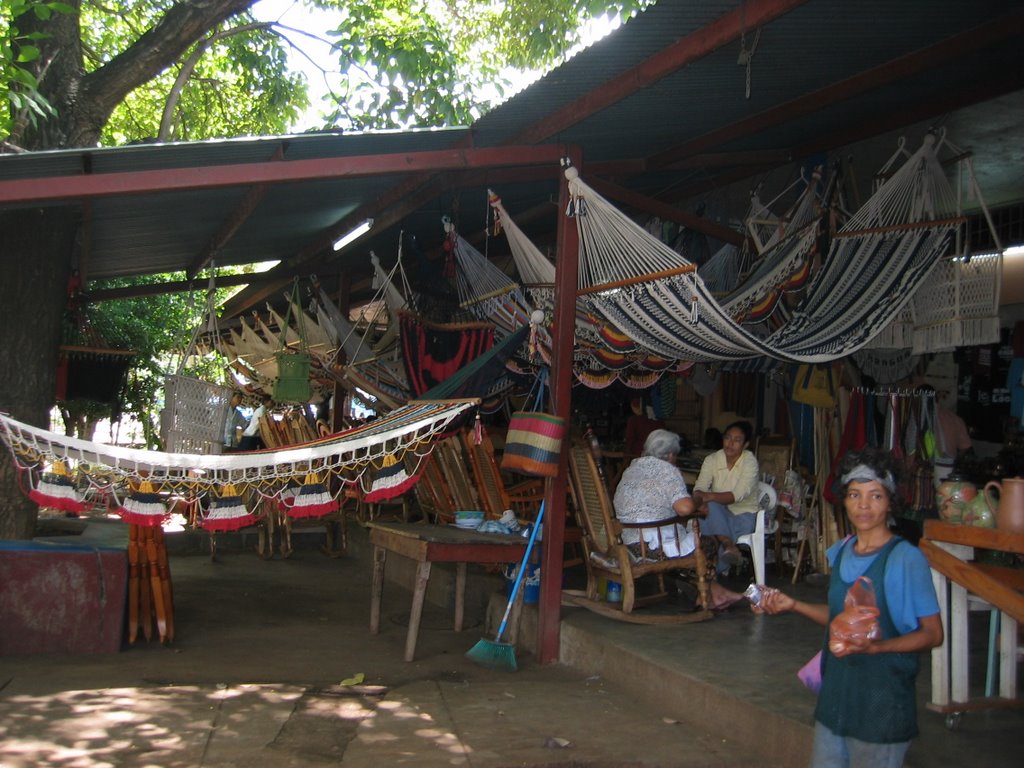
The leading export products are: peanuts, black beans, milk, gold, beef, shrimp, lobster, fish and hammocks (good stuff!:))
Other products gaining increased export share include: honey, melons, okra and watermelon.
Monday, October 16, 2006
Upcoming Holidays

September 13, 2006
Relating to the entry below, Awilliam today told me about the Sandinistas efforts to reduce illiteracy and poverty in the rural areas – by requiring high school and college students to spend five months in the most remote areas, teaching reading and another three months picking coffee or cotton.
Awilliam lived in a remote mountain village. He spent a short time picking cotton in the west of the country, but when the heat overcame him, he asked to transfer back to the mountains to cut coffee.
He didn’t seem to have very positive recollections of his service.
He recalled working together with several hundred other students in a coffee hacienda that had been confiscated from a well-to-do landowner.
“Every morning we were woken up at 4 a.m. to wash in the river. It was so cold! And the food was always the same – beans and tortillas for breakfast, beans, tortillas and egg for lunch. There were a lot of people who had stomach problems from so many beans. In the morning, we had to gather and sing the national anthem and the Sandinistan anthem.”
He began to sing it with a smile of derision. “We’ll fight against the Yankees and the enemies of humanity…”
“We wore military clothes and carried guns for protection. Sometimes we came across snakes or red-eyed frogs and the women’s screams echoes across the mountains.”
Looking at Awilliam’s gentle, intellectual face, the father of two daughters, it’s very hard to imagine him as a military and propagandistic tool of a political regime. But the faraway news that formed the distant reality of my junior high civics class was his life.
I asked why rural teachers couldn’t teach the illiterate in their communities to read.
“They could have,” he said. “But in addition to teaching people to read, the government wanted to make a show. They wanted to say, see, we are sending you people and making you a priority.”
The next two days are national holidays. Tomorrow is the anniversary of the 1856 battle of San Jacinto, the final battle of the 1856-57 National War. This was the battle in which many Nicaraguans, aided by Guatemalans and Costa Ricans, drove out William Walker, a nutty American who, as only one small event in the long history of US intervention in Nicaragua, had himself installed President, made English the national language and legalized slavery. This battle finally drove him out.
The 15th is Independence Day, when Nicaragua, and other Central American countries, received their Independence from Spain in 1821.
Sunday, October 15, 2006
The Causes of National Poverty in Nicaragua

September 13, 2006
Today, La Prensa newspaper carried an editorial that listed the 11 main causes of national poverty in Nicaragua. I thought I’d share them with you, summarized and translated into English. The piece was written by Edmundo Davila Castellon, a civil engineer and graduate of Incae (I believe that is a respectable university here).
1. Complete disregard for the national demographic explosion at 2.7% annually. Nicaragua has had the highest population growth in Latin America.
2. Megasalaries, pensions and benefits, which affect the transport, education, health and work opportunities (cost and availability) for others.
3. The national budget, which doesn’t take care of the population’s social needs.
4. Peasants migrating from the countryside to the city.
5. Degradation of animals, plants and nature.
6. Internal and external debt.
7. Ungoverability and political, social and economic factors that directly affect the economy, social peace and national and foreign investment.
8. Illiteracy and the lack of basic education
9. Frozen pensions, which don’t take into account devaluation or inflation.
10. Problems with property rights
11. Government corruption and wars
Any thoughts on the validity of this analysis? Are there causes that have been omitted?
Saturday, September 16, 2006
Food and drink in Nicaragua
 September 12, 2006
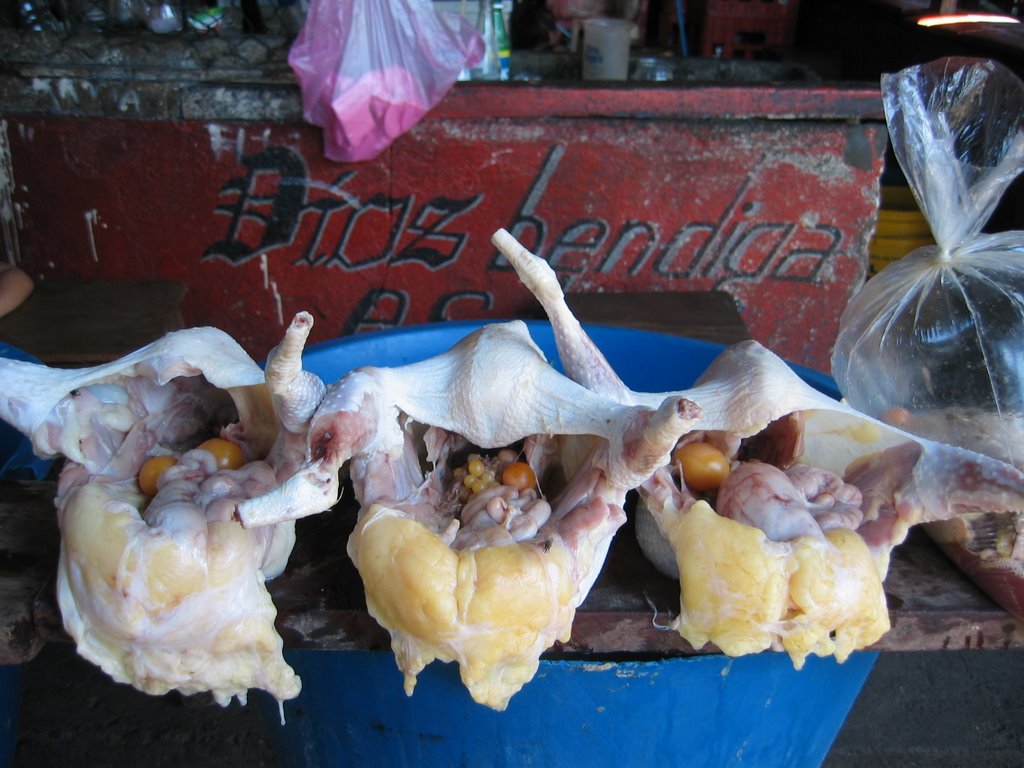
I have the depressing admission to make that I ate lunch at McDonalds today. I wasn’t able to get out for lunch until quite late, and the only places nearby are a McDonalds, a Subway and a supermarket. This comes as quite a shock for someone used to fast-food-free Kyrgyzstan.
Here, there is a fried chicken chain on just about every corner. Sodas have made their incursion in the same way they have in the U.S., while in Kyrgyzstan, people main drink soft drinks only during parties and special occasions.
With even the local food leaning heavily on the fried side, it’s no surprise that obesity is an issue here.
“She’s a bit fat,” one man told me today, explaining why he thought a 63-year-old woman was healthy and would live a few more years.
“It’s only here in the Caribbean that people consider being fat to be healthy,” his boss, Armando, said. “But really, they could have a heart attack at any time. And it’s largely due to our diet and its effects on our health that our life expectancy is only 60.”
Right now, one city, Leon, is suffering tremendously from people taking in an unhealthy beverage. Aguardiente, an alcoholic drink similar to rum, but without the mandatory four years aging, is drunk mostly by alcoholics and the poor.
Vendors of this drink buy it in 55 gallon drums. And to each five gallons, they might add a gallon of water, increasing their earnings by diluting it. If they add too much water, they add a bit of methanol in order to retain the alcohol level.
Recently, someone added too much methanol, and people (mostly men) are falling by the dozens. Last I heard, 36 people had died. The hospital in Leon is full and patients are being transferred to Managua. The U.S. military has donated supplies and the front page news story today was that an antidote to the effects of methanol was acquired and being administered to the patients. Those who survive could face blindness or the ruination of their digestive systems.
I also learned today about a restaurant not far from my house that makes a famous sopa levantomuertos (soup to raise the dead). It’s only served from 8 p.m., contains lobster, fish and shrimp, and is served very hot, in order to sweat out alcohol. After drinking and dancing, when people are drunk and feel they can’t take any more, they order this soup and suddenly regain the strength to continue dancing throughout the night.
Hairy pig skin, methanol laced homemade alcohol, soup that makes one sweat. Yum yum.
One week after being virtually paralyzed by my lack of speech, I can now communicate. I understand most of what’s being said. I can read the local newspaper And while I think I still sound like an idiot, I can more or less get my points across.
Russian words dot my speech frequently. But other times, I try to think of a word in Russian and find I can’t reach beyond the Spanish. It will probably be another struggle to adjust when I return to Kyrgyzstan and find myself using Spanish words in the place of Russian.
At home (or not) in the city
 September 11, 2006
Yesterday I tried to take my first walk and didn’t have much luck. I got lost (even going a short distance). Yes, the guidebook is right. There are no landmarks in this city and no center. I didn’t have any real problems. But I didn’t feel safe.
A lot of men whistled at me and made smooching sounds or under the breath comments. I haven’t experienced that since high school. And it’s a strange, and unwelcome change, from Kyrgyzstan, where no one harasses me in any way. They consider me much too old to warrant any attention in any case.
I felt I had to take my watch off, even though it’s not of any significant value. After I put it in my pocket, I continued to look around me vigilantly, feeling obvious and out of place on the quiet Sunday streets.
I learned that Sunday is the day of rest and most businesses are closed. Even in the middle of the day, the streets are virtually empty.
I made a mini-project for myself to learn the bus routes, thinking that would force me to pay more attention to my surroundings, to learn my way around, and to have more contact with the people I feel too separated from.
That worked relatively well. I took two buses yesterday. I got off of one too early, and ended up needing to take a taxi. But at least I learned something in the process.
Today, during my lunch break, I went out to a nearby market to start buying souvenirs for my Kyrgyz colleagues. I told the guard I was taking a look at the market and left. I asked passersby where the handicrafts section was, found it, and was doing just fine when I suddenly noticed the wide-hipped cleaning lady at my side. Someone had sent her after me, to mind me, to take care of me.
She immediately instructed me to take off my watch, and to be careful with the plastic bag I carried. I appreciated the sentiment of her protection. But her presence made it impossible for me to shop. Could I spend $10 on a painted box for my niece knowing that she likely earned less than that in a day? No. So I bought something cheaper.
She led me to a Jamaican café for a quick fritanga – fried platter of stewed chicken with black beans and fried plantains. And when they didn’t have Diet Coke, she went out and brought one to me. Only when I convinced her I could make it the several feet back to the office on my own did she leave.
I am allowed to walk the ten minutes to work. But then am shepherded from the office to another office and back home. Everyone I have contact with seems to know where I am at any one time. While this is very nice from a security perspective, it unfortunately leads me toward the more typical expatriate lifestyle, of living a life outside of and beyond the local community. I haven’t had a chance to have extended conversation with anyone besides my colleagues, so Awalter, my Spanish teacher, has become my main window into the culture.
Today during Spanish class, Awilliam told me he loves chicharon, fried pig skin.
“Have you tried it?” he asked.
I said I hadn’t. But I’d be interested in trying it if it was locally popular.
“I have some right here!” he said. And to my surprise, he unzipped his black portfolio. He popped a skin into his mouth, with a crunch, and handed one to me.
I took a bite of the hard, crunchy thing and didn’t like it especially.
“Is this a pig hair?” I asked him, looking at a small red hair on the skin.
“Yes,” he said, seeming embarrassed, as though it wasn’t supposed to be there. “But it’s been well fried.”
“And this too?” I asked, finding one more, and then several others. The hairs made it too easy to imagine the pig’s paw and I found it pretty gross. I put it to the side of my papers during the lesson, then gave it back, thanking him for the experience.
A visit to the city center

September 10, 2006
I was pretty bummed out to be here a week and feel as though I really hadn’t seen anything of the city. So today, I organized a conversational Spanish lesson and arranged for it to be held somewhere in the city.
Awilliam picked me up in his 1981 Datsun truck. None of the indicators – speed, temperature, gas – worked, to roll down my window, he attached the crank, then removed it, and opening the door required a punch in a certain location of the door. But I was excited to get out and see something – anything.
His plan was to take me to Revolution Plaza. But the main road was closed off, due to a motorcycle race and we had to take a detour.
We went through what Awilliam said used to be old Managua. Until the earthquake of 1972, it was the center of town and filled with multistory buildings. But now mostly one-story homes of low-income residents fill it. Even these are built with steel rods to weather future earthquakes. Awilliam said that parts of Managua lie directly on faults.
Early on a Sunday morning, there wasn’t much activity at the Revolution Plaza. But I saw the most attractive collection of buildings I’ve seen so far in Managua.
We stood in front of the old cathedral, where two guards kept visitors at bay and the birds living inside tweeted contentedly.
“It’s their palace,” Awilliam said.
It had been heavily damaged in the earthquake of 72 and Awilliam said that pieces can come tumbling down at any time. It seemed to be a dangerous job for the two guards.
A still, round fountain stood in between the church, the yellow and sand-colored Presidential offices, the ivory National Museum, and a deteriorating park. This fountain, Awilliam said, used to be very beautiful. And in order to tell me the story, he filled me in on the past several decades of Nicaraguan history.
At the time of Nicaraguan independence, in 1921, there were two parties, the Liberal and the Conservative Party. The conservative party almost always held control. In 1893 the Liberal Party sponsored a revolution, wanted more changes. Among their achievements were bringing coffee to Nicaragua for production and export. By the mid 1950s, Nicaragua had good roads, plenty of work and a strong currency.
But at that time, the hippies set the fashion. And when the Cuban revolution took place in 1959, the Liberal party no longer seemed to be on the forefront of change. The future was with Castro and with the Soviet Union.
A group of Nicaraguans went for ideological and military training in socialism. These people later founded the FSLN (the Sandinistan Front for National Liberation), which opposed the Liberal party. They began a guerilla war, which drove President Samosa out of office in 1979.
When the FSLN assumed power, they moved to the extreme left, forming close relations with Castro and Qaddafi, confiscating homes and land from the rich, jailing and killing people with other ideas.
The people didn’t want an extreme government, so they began a contra-revolution, which the U.S. assisted. Wars began in Guatemala, El Salvador, Honduras, Colombia, Bolivia and Peru.
“Nicaragua served as a bridge for transporting arms to this different wars,” Awilliam said. “The U.S. knew Cuba could be controlled because it was an island. But Nicaragua had the possibility to spread these problems throughout the region.”
In 1985 the population asked for elections. The FSLN agreed, but only allowed the FSLN, Socialists and Communists to run. The FSLN won.
By 1989, the war was serious. Young men were drafted from schools and universities, sent to fight without any experience, died.
“The mothers and fathers looked ahead to the future and saw that their children would die in battle. They didn’t want war anymore,” Awilliam said. So they asked the Organization of American States and the UN for pluralistic elections with observers.
The FSLN gave permission to anyone who wanted to form a political party. Despite the continued danger of opposing the regime, 14 parties were established.
“No one could speak openly,” Awilliam said. “On each corner stood CDSs, members of the Committee in Defense of the Sandinistas. They were the eyes and ears of the Revolution. They could kill anyone they thought was against the Revolution.”
The parties recognized that without uniting, they couldn’t defeat the FSLN, which controlled all the countries resources. So in September of 1989, they formed into a single party, Party UNO, the Union of National Opposition.
UNO won the election and took power in 1990.
“It was very difficult for them though,” said Awilliam. “Because everything Nicaragua had was under FSLN control – the police, the army, transport. They couldn’t just change the leaders because there were masses of people under them still loyal to the FSLN, who could organize coups. They decided to leave the leaders in place, to try to change them little by little.”
In the 1995-96 elections, UNO disappeared and the 14 parties competed separately. The Liberal Party won, based on the progress it had made during its former rule. The President, Arnoldo Aleman, obtained investments, built new hotels and tourist structures, and created the National Museum, the Presidential offices, and the fountain we were looking at.
“But he had a problem,” Awilliam said. “He stole money. There was a lot of corruption.”
By 2001, the population, tired of the corruption, was ready to vote FSLN back into power. Until the events of September 11th. After the attack on the World Trade Center, FSLN leader Daniel Ortega was interviewed on TV. He congratulated Osama Bin Ladin, saying it was about time the U.S. experienced the same thing it did in other countries.
After that interview, President Bush said that if the FSLN won the election, the U.S. would immediately impose a blockage on Nicaragua, equal to those imposed on Cuba, Iraq and North Korea.
“The Nicaraguans knew what a blockade was like from the 1980s,” Awilliam said. “And they were afraid. Even the Sandinistas didn’t vote for the Sandinistas.”
So the former Liberal Party vice-President, Enrique Volanyos, became President.
“The fountain had expensive colored lights, streams of water, and speakers. But that wasn’t all,” Awilliam said. “The water and lights moved to the rhythm of the music. So when a particular symphony was played, the water and light flashed and moved to the music. People would gather at the park to watch and listen.”
However, in the last two biannual municipal elections, the Sandinistas won. And the Sandinistas ignored the fountain. When it broke, due to neglect, they didn’t want to repair it, because it had been created by the Liberals.
We walked to a nearby area, where we ambled along the top rows of a white bandstand. In one direction, I could look out at the obelisk built to honor Pope John Paul II, at a faded amusement park and young boys driving four-wheelers for rent, at a statue of Simon Bolivar, the liberator of the Americas, on a horse.
In the other direction, I looked out at the shores of Lake Xolotlan, polluted due to dirty water that has run into it from higher elevations, and a series of small lakeside cafes, where people gather to drink and dance in the evenings. A Cuban café played upbeat Spanish music, wild parakeets make a constant racket, and the smell of garbage filled the air, despite the impressive numbers of trash bins.
“The government keeps reminding people to keep their city clean. But they throw things on the ground anyway. It’s very difficult to change,” Awilliam said.
I looked out at culture, history, nature and amusement, at a place with so much potential. But it felt run-down, abandoned, stripped of its potential. Maybe it appears differently in the evenings, when concerts are in progress and the heat and spirit of the people liven the area up. But for now, it seemed emblematic of where Nicaragua is right now – a place of potential that needs a good push forward.
When I returned home, I turned on the TV. Awilliam had told me that channel 8 showed sensational local news. And when I came across it, the coverage struck me. A motorcycle, that had participated in the races we passed, hit some bystanders. One person died and four were injured.
The news camera came in for close-up shots of the stunned and hurt living, as well as the woman who’d died. According to the broadcaster, the heavyset woman lying face-down in the street, her legs splayed, her shorts ripped open, was a vendor named Dona Theresa. She’d been selling things to the bystanders and had been with a child, who wasn’t with her at the time of the accident. The camera zoomed in to where guts were spilling out of her knee, where the bike had probably run over her.
It was really distressing to see. It may be called censorship, but I’m glad the news in the U.S. doesn’t show such images. It didn’t do me any good to see that. I only found it disturbing to see the lifeless body of someone who rose this morning to work, trying to support her family. And it must be terrible for her relatives. The broadcaster seemed to expect her relatives to be watching.
“Her body is in the morgue, waiting to be identified by relatives,” she said. “Dona Theresa didn’t have any identification on her.”
Caught in the rain

September 9, 2006
Today at my Spanish lesson, my teacher, Awilliam, told me he’d missed the news last night.
“So today, when I went to the university to teach,” he said, “I found out that two of my students, sisters, aged 15 and 19, died in a house fire.”
He said it was caused by an electrical problem. The father had left early for work. The girls didn’t have classes that day and were still sleeping. The neighbors heard their screams from the second floor.
“Why couldn’t they jump?” I asked.
“Because, you know, in Nicaragua security is very important.” They’d had metal bars on their windows, to keep thieves out, but also to trap them in.
“Those on the first floor got out,” he said. “But those upstairs died.” He paused. “They were so young.”
At 4 p.m. today, I had my very first free time in the daylight, an hour or two to go see or do something in the city. I decided to visit the volcanic lake of Tiscapa. This crater lake, in the center of town, was supposedly very clean in the past. But during the Sandinista time, it was contaminated by another water source and is now said to be pretty nasty.
I’d read they had a canopy ride – something I think is like a cable that you attach yourself to and swing across the landscape and thought it would be fun to try.
Awilliam gave me a lift on the back of his motorcycle. Dark clouds gathered on one horizon and Awilliam commented on the approaching rain. I didn’t take it too seriously. Although it’s supposed to be rainy season, I haven’t actually seen a heavy rain yet.
We drove to an overlook where I could see the greenish brown water at the base of a forested crater. Kayaks paddled back and forth.
He dropped me off at the other side of the lake, at the park entrance. I walked uphill, past a series of bright white steps lined with tanks – a soldier’s memorial. A bolt of lightening crashed into the ground just ahead of me, causing me to tremble. By the time I’d neared the top of the hill, raindrops had begun to fall. Grey clouds covered half of the sky, while the other half was sunny and blue.
I expected the rain to pass quickly. I knew a canopy ride was no longer in the plan, but I wanted to explore the lake and the park a bit. So I huddled under an umbrella and wanted for it to stop. Instead, it only intensified. When I looked at the darkness of the sky, I realized it would probably take a while and started making my way downhill.
By this time, I was drenched. My pants were completely soaked, my sandals squeaked, sopping with water, and I could only dry to keep my backpack from getting too wet. Water coursed down the roads and ran in waterfalls off the roofs, and down a crumbling stadium.
I sloshed my way to the Crown Royal, a fancy hotel nearby, where I’ve just joined the health club. (I know, I feel very uncomfortable patronizing a ritzy hotel in a country this poor. But after going almost a whole week without a workout, I realized that for now, this is my only chance for getting some exercise). One of the benefits of the health club is access to the swimming pool. And they might have thought I’d jumped into the pool, fully clothed, as I dripped down their hallways.
The lightening continued to jolt the earth with such power, I worried about metal nearby, and could imagine being hit. Even the health club worker winced when a bolt landed seemingly just beyond the swimming pool.
“I think it was a hurricane,” my taxi driver later said, recommending not to walk in such powerful rain, because the roads turn into rivers. I’d been eager to see what makes the land so green and it showed itself with all it’s force. Not only could I visualize the source of the greenery, but I saw the powerful workings of the earth, the angry torrents that, along with other geological activity, whipped the earth into its shape of volcanoes, mountains, jungles, lakes and craters.
So I cut short my exploration plans with a short workout, a peek at the movie theater in a modern mall across the street, and then a few precious, extremely welcome hours to myself at home. I didn’t even mind that our storm knocked out our power, and that I’m writing this in blackness.
Thursday, September 14, 2006
First Day in Managua
 September 5, 2006
I didn’t have much opportunity to spend time on the street yesterday, but I did finally make it downtown and caught my first glimpses of the capital. What did I notice? A bright, colorful city under a hot, sunny, cloudless sky. Plenty of green, with tropical trees lining the median. Colorful ads, for deodorant, Fanta, Esso gas. Small, run-down buildings followed by nicer areas.
We passed a square where people seemed to live on hammocks strung from the trees and under flimsy tents made of black plastic. I asked a colleague, Kenia, why they were there.
“There was a banana company that used chemicals that caused mutations
in people. But because the company is no longer in Nicaragua and has been bought by another company, they don’t want to deal with the consequences. Those people live there in hopes that the government will support them.”
“How long have they been there?”
“A long time. Too long.”
A large bronze statue with a man holding a gun toward the sky, a red and black flag at the tip of the gun. “Only the workers and peasants will go to the end. FNT.” Lots of activity on the street. My companions told me to lock my door when we stopped at a stoplight.
“It’s dangerous,” they said, as a window washer approached, as well as vendors selling everything from tires to books to passing cars. A man sat on the median, making sit-upons out of plastic, a row of colorful two-part chairs hanging on the line.
They told me it is the safest country in Central America, perhaps in Latin America. However, they said some parts of the city are OK for walking, others not. Even my new neighborhood, which is considered one of the better areas, is apparently not safe to walk through after 7 p.m.
“That’s the barrio!”, the driver, Alfredo, said with emphasis as we passed an intersection that led to a row of common houses among the fancier neighbors. As if the barrio was populated by untouchables. It makes me feel separate, isolated from these people, most of whom are probably good.
Alfredo said there were too many people out of work there, the street was dark and isolated at night, and sometimes groups of men would stand out on the corner. I wish I had my bike. If I had wheels, I know I could outrun them.
I spent the day at the office, where several guards with guns stood at the door. Despite the scary-looking security, in the entire country, there was only one attack and that was five years ago.
I slowly, very slowly, began to dip back into my Spanish. My last opportunity to speak Spanish was the two weeks I spent in the Dominician Republic over two years ago. And before that, I had another hiatus of several years.
My ability to understand depends on who is speaking, but is somewhere in the 80 to 90% range. This is the only factor that prevents me from feeling like a complete idiot. Because my speaking is horrendous. When I arrived at the hotel, words came out slowly, individually, in little, hesitant shots. At the office, trying to talk about professional issues, it was even harder. At times, I had to give up and try English as I sat in silence, trying unsuccessfully to dig up the Spanish word from under the Russian and English.
My colleagues and boss are supportive. We spoke only Spanish during our lunch at an Italian restaurant, where I enjoyed fish from the sea, despite my significantly slowing down the conversation. And I’ll start Spanish lessons today, hopefully an hour a day.
Except for the little time I spend writing, I’ll be fully immersed in Spanish – with all dialogue and written materials in Spanish at work. At home I’m trying to limit myself to Spanish TV and Spanish books, at least until I improve. Russian has never seemed so easy and comforting as now!
At lunch, my boss, Carl, told me Nicaragua is the poorest country in Latin America, after Haiti. I asked what prevented it from developing. He named two reasons. One is the general lack of development in the country and the fact that Nicaragua doesn’t have a special hold in any of the agricultural products they produce – coffee, bananas. Second is the corruption among the elites. He said the former President was said to have stolen $300 million dollars. Nicaragua exports the equivalent of $600-700 million a year. So one person stole half of an entire year’s export income. There are powerful families who control much of the countries, establishing monopolies (for example, in sugar), and then controlling the associated industries.
I asked about the growth potential for small businesses not associated with these families. He said generally, the best they can hope for is stability, or diversification in sources of income, rather than strong, continued growth.
I live close to the office, so I can walk in the mornings. It’s an attractive little arrangement. Called an apartment, I have a bedroom, joint kitchen/dining room/living room, and bathroom. It’s simply, but nicely furnished and has basic kitchen equipment. There are eight such apartments, which are visited and cleaned daily by the staff.
A few things I noticed early on about the life and culture include: the importance of coffee (a tea with milk drinker here is considered strange), a love of air conditioning and the unfortunate presence of the large yellow arches with McDonalds hamburguesas. Best of all, I love the public schoolbuses, which the owners seemed to take great pride in. They paint them bright colors, hang strips of cloth from either side that flutter in the wind, and name them, such as Lobo de Aire – Wolf of the Air. Watching them move through the city is to me like seeing flowers move down the street.
In the evening, I went to a supermarket to pick up something for dinner. The long, bright rows glimmered with local and imported food, toiletries, even clothing. And it was packed. At least ten carts stood in line patiently to have their fruits and vegetables weighed. I liked the foreign feel among the modernness, the local fruits and vegetables, the huge bags of rice and beans, and the products I don’t see elsewhere, like guava jelly.
For less than 20 cents, I bought a package of six starfruit. Justified or not, I don’t know yet, but I don’t have the confidence in the quality of Nicaraguan produce and meats as I do in the Kyrgyz. The banana chemical protest scared me. And I have the sense that products are made cheaply when possible. My orange juice, which said it was from concentrate, had sugar in it. My ice cream, instead of cream, used skim milk and then added animal fat. In this strange city, where there don’t seem to be commercial centers, I haven’t yet been able to clearly identify where I can find food, other than at McDonalds or the supermarket. So it will be a process of exploration.
A Series of Mishaps
September 3, 2006
Enroute to Nicaragua, I had a short stop in the U.S. There, I got caught in tropical storm Ernesto. I saw the mean, powerful grey waves build up their strength before crashing into shore, spreading spray over the spectators. The greyness was absolute, spreading out to the horizon and then across the sky, a gravid sign of the storm to come. We decided to escape the rainy afternoon by heading to the movies (I thought Little Miss Sunshine would brighten things up). Upon emerging from the movie theater, we found the island strip of Jersey shore we were on flooded.
We ended up driving along roads that were like lakes. From the car window, I watched pedestrians cross the street in water up to their knees, travel in blow-up plastic boats, look outside front doors as the water crept up around their houses, and stand on dry patches snapping photos of the driving through the floods. It was quite scary to think of the car stalling in the deep water, to be stuck on a small strip of land as the water continued to rise. I thought of how terrifying it must have been for those standing on their rooftops during Hurricane Katrina, watching the waters rise toward them.
Luckily, we got out OK, and I got to Nicaragua. The view from the plane upon landing was enticing. From the order, pools, red roofs, and waterways I saw upon takeoff from Miami, Nicaragua provided a contrast of dense greenery under a soup of clouds. The remote, scattered homes seemed rare among the immense, vast swathes of green. It looked dark, empty and wild, brightened by the rainbow that descended vertically from the clouds toward the land.
We flew over a dark body of water, Lake Xolotlan, and then an attractive city on the lakeside – Managua. As a lover of lakes, I think I’ll be happy here. Managua is right on one lake, and only 30 minutes from another large, reputedly beautiful lake. And Managua, at least from the air, looked much more attractive than my guidebook led to me believe. A few singular peaks, which reminded me of Osh’s Souleymane mountain, rise in the mist behind the city. I noticed red and gray roofs, a traffic circle, and lots of rigs. At 6:53 we landed on the bright green runway, dense trees nearby.
But no one was there to meet me at the airport, as had been planned. And on a Sunday night, I didn’t know who to call nor where to go. So I found myself alone in a foreign country with no money, no contacts and no ideas of where to go.
I ended up taking the easiest option, by walking across the street to the Best Western. I’ll spend the night here and hope the logistics can be ironed out when offices open for work again tomorrow.
This is the nicest Best Western I’ve ever been to and is a very pleasant place to spend my first evening in Nicaragua. The hallways are outdoors and the rooms are like small cabins. It feels light, clean, colorful and tropical. If only I wasn’t alone…
Enroute to Nicaragua, I had a short stop in the U.S. There, I got caught in tropical storm Ernesto. I saw the mean, powerful grey waves build up their strength before crashing into shore, spreading spray over the spectators. The greyness was absolute, spreading out to the horizon and then across the sky, a gravid sign of the storm to come. We decided to escape the rainy afternoon by heading to the movies (I thought Little Miss Sunshine would brighten things up). Upon emerging from the movie theater, we found the island strip of Jersey shore we were on flooded.
We ended up driving along roads that were like lakes. From the car window, I watched pedestrians cross the street in water up to their knees, travel in blow-up plastic boats, look outside front doors as the water crept up around their houses, and stand on dry patches snapping photos of the driving through the floods. It was quite scary to think of the car stalling in the deep water, to be stuck on a small strip of land as the water continued to rise. I thought of how terrifying it must have been for those standing on their rooftops during Hurricane Katrina, watching the waters rise toward them.
Luckily, we got out OK, and I got to Nicaragua. The view from the plane upon landing was enticing. From the order, pools, red roofs, and waterways I saw upon takeoff from Miami, Nicaragua provided a contrast of dense greenery under a soup of clouds. The remote, scattered homes seemed rare among the immense, vast swathes of green. It looked dark, empty and wild, brightened by the rainbow that descended vertically from the clouds toward the land.
We flew over a dark body of water, Lake Xolotlan, and then an attractive city on the lakeside – Managua. As a lover of lakes, I think I’ll be happy here. Managua is right on one lake, and only 30 minutes from another large, reputedly beautiful lake. And Managua, at least from the air, looked much more attractive than my guidebook led to me believe. A few singular peaks, which reminded me of Osh’s Souleymane mountain, rise in the mist behind the city. I noticed red and gray roofs, a traffic circle, and lots of rigs. At 6:53 we landed on the bright green runway, dense trees nearby.
But no one was there to meet me at the airport, as had been planned. And on a Sunday night, I didn’t know who to call nor where to go. So I found myself alone in a foreign country with no money, no contacts and no ideas of where to go.
I ended up taking the easiest option, by walking across the street to the Best Western. I’ll spend the night here and hope the logistics can be ironed out when offices open for work again tomorrow.
This is the nicest Best Western I’ve ever been to and is a very pleasant place to spend my first evening in Nicaragua. The hallways are outdoors and the rooms are like small cabins. It feels light, clean, colorful and tropical. If only I wasn’t alone…
Thursday, August 31, 2006
visit to Latin America
August 30, 2006
I’m just about on my way to Latin America. The plan is to spend five weeks in Nicaragua. Perhaps I’ll manage to make it to other countries as well. For readers interested in Kyrgyzstan, I’ll be back to Kyrgyz blogging in mid-October. Until then, this site will be full of my impressions and experiences in Central America.
I’m just about on my way to Latin America. The plan is to spend five weeks in Nicaragua. Perhaps I’ll manage to make it to other countries as well. For readers interested in Kyrgyzstan, I’ll be back to Kyrgyz blogging in mid-October. Until then, this site will be full of my impressions and experiences in Central America.
A toi
August 29, 2006
Last night I attended a toi, held in honor of Gulnara’s son’s one-year birthday. It was held at the same café as his 40-day birthday toi, held just under a year ago. There were slightly fewer guests at this one – but I’d seen many of the guests three times – first at Gulnara and Shamil’s wedding, then at the first toi, and then last night.
When I arrived, I saw Ravil wearing a kalpak, shiny black boots, and a Kyrgyz vest and pants, bordered in gold embroidery. He was sitting, in all places, in a white motorized car. Older boys commandeered the car, driving him around the floor of the hall as if a raja on his way to worship. Clearly he was the little prince of the party and the only grandchild on both sides of the family.
Gulnara sat me at a table and I was surrounded by many familiar faces, all of whom seem to be actively working on the population of Kyrgyzstan. I sat across from a woman expecting a baby in September. When she left, a couple expecting a child in November took her place. And the young woman next to me dandled her five-month old baby.
A woman wearing a frilly bright yellow blouse and a black embroidered Kyrgyz robe served as the emcee. They went through the same procedures as at all weddings and tois – people were called up to the microphone in groups, they presented their wishes and congratulations in long speeches, gave their gift, and sometimes led the group in a song or dance.
Except for Russian couple across from me, everyone else in attendance was Kyrgyz, and for a few hours, I floated in a sea of non-understanding. I didn’t mind though, as the faces were friendly and people were having fun.
Some time into the toi, I noticed a dialogue that seemed to turning biting.
“It’s not discrimination!” a severe-looking Kyrgyz woman, with glasses and an egg-shaped face said to Stella, the Russian across from me.
Stella had asked why all of the congratulations and gifts were being presented to Gulnara, Shamil, and Shamil’s mother. Gulnara’s parents sat in a corner of the room, far from the well-wishers.
“It’s their grandchild too,” Stella said. “Why don’t they have a right to congratulations?”
“They have a right,” the Kyrgyz woman said. “But it’s a voluntary matter. If they wanted to receive the congratulations they could go up there.”
“It’s because the husband’s parents are higher. They are more important,” the Kyrgyz woman’s husband interjected, with a smile and a look of pride.
“Then it’s discrimination,” Stella said.
“No it’s not!” the Kyrgyz woman insisted.
It was a first time I’d heard a local, albeit of another ethnicity, challenge openly the gender discrimination, a slight to Gulnara’s parents that I hadn’t even noticed. We learned that Shamil’s family paid most of the expenses associated with the toi, and so they also received the presents.
“Then I guess you have it good,” Stella addressed the young woman next to me. “You have two daughters, so you get rid of them at marriage and then you are done.”
True, she’ll have almost no more expenses. But she’ll also have no security, since if her daughters follow tradition, they will be expected to serve and to financially support only the husband’s parents. The built in system of expectations – that a daughter is only an expense and a son is a form of social security – drives the strong desire to have sons.
The most interesting part of the toi, and something I hadn’t seen before, was the running. Gulnara had urged me to hurry to the toi after work.
“Don’t be late because we’re going to run!”
“What do you mean?” I asked.
And she told me to wait and see.
At the appropriate time, all of the guests filed out onto the street. There they made a starting and a finish line. Ravil stood at the finish line in his Kyrgyz finery. Only then did a notice a piece of string that tied his ankles together.
All of the young boys assembled for a race. At the mark, then ran toward Ravil. Gulnara’s father opened his wallet wide, giving the winner 100 som ($2.50). Shamil’s mother handed out prizes to the other participants. Then a relative cut the string binding Ravil’s legs and the first and second prize winners each took one of his hands, leading him on a walk. This was symbolic of him beginning his path of life. From this point, he can walk, he received the blessing and the assistance of the fastest runners, and from now on, he can only move forward.
The young girls raced next, with the winner receiving 50 som (half the amount the boy winner received). Then came the adult women. I participated and came in third or fourth place.
“For your participation!” one of Gulnara’s uncles said as he handed me 200 som ($5). Shamil’s mother gave me a towel. Then came the adult men, the old ladies, and then the old men. The winner among the old men received the biggest prize of all.
Traffic on the sidestreet had to stop while races were underway and I watched the drivers smile when they saw the normally non-athletic guests running in dress shoes down the middle of the road. It was a fun and enjoyable tradition to experience.
August 27, 2006 the beauty of Bishkek
August 27, 2006
Last week, after my Naryn/Tash Rabat/Son-Kul adventure, I spent several days on Issyk-Kul attending a conference. Tourists packed the northern shore. This was a record year for tourism in Kyrgyzstan and the effect was particularly seen on Issyk-Kul.
“For the first time ever, I saw private home put up ‘no vacancy’ signs,” my Kyrgyz colleague Maria told me.
Those connected with tourism raked in the cash during the short three-month season. Even in Bishkek, the Issyk-Kul influence is felt.
“Where is everyone?” I asked a market vendor yesterday. There were hardly any buyers for a Saturday afternoon.
“They are all at Issyk-Kul,” she said.
Within the next two weeks, the season will die down, school will begin, and people will return from vacation. Then the country will get back to work and to preparing for fall weddings.
Yesterday, while I was shopping at my local market, the beauty caught my breath. The colorful piles of tomatoes, green and red peppers, purple eggplant, yellow peaches, green apples, purple and green grapes, mounds of green onions and spices, fluffy heads of lettuce, round and oblong melons, red strawberries and the standard gold, brown and orange of the onions, potatoes, and carrots shimmered in a rainbow of color. I saw the full abundance that the Kyrgyz soil could produce and I felt awe, especially when I recognized this is only the beginning.
In the coming months, the wooden stands will remain stocked with beautiful, shining piles of fruits and vegetables. And amidst such a bounty, I understood why so many families plan weddings and other large celebrations for the fall. With the cattle fattened after months on the jailoo, and the fields dripping with produce, the locals are only taking advantage of their riches.
As I prepare to leave on an extended trip, I look at Bishkek more carefully. I notice the ad for Inexim bank over a bus stand on Chui prospect, the first advertisement of its kind. I see the Turkish department store/supermarket/movie theater that opened, bringing modern shopping to Kyrgyzstan. I see the wide-screen TV playing on a central street, broadcasting a program on butterflies. I joined those leaning against the railing and looked up at the advanced technology. I see the salaries rising due to competition for smart, educated young people. And even when my electricity most annoyingly goes out, and I have to spend my evening in candlelight, I appreciate how I can prop my door open with a shoe and not worry about criminals coming in. For those who are employed, Bishkek is a beautiful, safe, comfortable, green, modern and very pleasant place to live. Of course, I still love Osh. But I think this city is growing on me.
In my dark apartment, I try to imagine myself in Managua one week from now. It seems so far, so distant, and so foreign. I try to imagine myself speaking to locals, maneuvering the streets, sleeping in a Nicaraguan bed, eating local food. And I just can’t see it.
Last night I attended a toi, held in honor of Gulnara’s son’s one-year birthday. It was held at the same café as his 40-day birthday toi, held just under a year ago. There were slightly fewer guests at this one – but I’d seen many of the guests three times – first at Gulnara and Shamil’s wedding, then at the first toi, and then last night.
When I arrived, I saw Ravil wearing a kalpak, shiny black boots, and a Kyrgyz vest and pants, bordered in gold embroidery. He was sitting, in all places, in a white motorized car. Older boys commandeered the car, driving him around the floor of the hall as if a raja on his way to worship. Clearly he was the little prince of the party and the only grandchild on both sides of the family.
Gulnara sat me at a table and I was surrounded by many familiar faces, all of whom seem to be actively working on the population of Kyrgyzstan. I sat across from a woman expecting a baby in September. When she left, a couple expecting a child in November took her place. And the young woman next to me dandled her five-month old baby.
A woman wearing a frilly bright yellow blouse and a black embroidered Kyrgyz robe served as the emcee. They went through the same procedures as at all weddings and tois – people were called up to the microphone in groups, they presented their wishes and congratulations in long speeches, gave their gift, and sometimes led the group in a song or dance.
Except for Russian couple across from me, everyone else in attendance was Kyrgyz, and for a few hours, I floated in a sea of non-understanding. I didn’t mind though, as the faces were friendly and people were having fun.
Some time into the toi, I noticed a dialogue that seemed to turning biting.
“It’s not discrimination!” a severe-looking Kyrgyz woman, with glasses and an egg-shaped face said to Stella, the Russian across from me.
Stella had asked why all of the congratulations and gifts were being presented to Gulnara, Shamil, and Shamil’s mother. Gulnara’s parents sat in a corner of the room, far from the well-wishers.
“It’s their grandchild too,” Stella said. “Why don’t they have a right to congratulations?”
“They have a right,” the Kyrgyz woman said. “But it’s a voluntary matter. If they wanted to receive the congratulations they could go up there.”
“It’s because the husband’s parents are higher. They are more important,” the Kyrgyz woman’s husband interjected, with a smile and a look of pride.
“Then it’s discrimination,” Stella said.
“No it’s not!” the Kyrgyz woman insisted.
It was a first time I’d heard a local, albeit of another ethnicity, challenge openly the gender discrimination, a slight to Gulnara’s parents that I hadn’t even noticed. We learned that Shamil’s family paid most of the expenses associated with the toi, and so they also received the presents.
“Then I guess you have it good,” Stella addressed the young woman next to me. “You have two daughters, so you get rid of them at marriage and then you are done.”
True, she’ll have almost no more expenses. But she’ll also have no security, since if her daughters follow tradition, they will be expected to serve and to financially support only the husband’s parents. The built in system of expectations – that a daughter is only an expense and a son is a form of social security – drives the strong desire to have sons.
The most interesting part of the toi, and something I hadn’t seen before, was the running. Gulnara had urged me to hurry to the toi after work.
“Don’t be late because we’re going to run!”
“What do you mean?” I asked.
And she told me to wait and see.
At the appropriate time, all of the guests filed out onto the street. There they made a starting and a finish line. Ravil stood at the finish line in his Kyrgyz finery. Only then did a notice a piece of string that tied his ankles together.
All of the young boys assembled for a race. At the mark, then ran toward Ravil. Gulnara’s father opened his wallet wide, giving the winner 100 som ($2.50). Shamil’s mother handed out prizes to the other participants. Then a relative cut the string binding Ravil’s legs and the first and second prize winners each took one of his hands, leading him on a walk. This was symbolic of him beginning his path of life. From this point, he can walk, he received the blessing and the assistance of the fastest runners, and from now on, he can only move forward.
The young girls raced next, with the winner receiving 50 som (half the amount the boy winner received). Then came the adult women. I participated and came in third or fourth place.
“For your participation!” one of Gulnara’s uncles said as he handed me 200 som ($5). Shamil’s mother gave me a towel. Then came the adult men, the old ladies, and then the old men. The winner among the old men received the biggest prize of all.
Traffic on the sidestreet had to stop while races were underway and I watched the drivers smile when they saw the normally non-athletic guests running in dress shoes down the middle of the road. It was a fun and enjoyable tradition to experience.
August 27, 2006 the beauty of Bishkek
August 27, 2006
Last week, after my Naryn/Tash Rabat/Son-Kul adventure, I spent several days on Issyk-Kul attending a conference. Tourists packed the northern shore. This was a record year for tourism in Kyrgyzstan and the effect was particularly seen on Issyk-Kul.
“For the first time ever, I saw private home put up ‘no vacancy’ signs,” my Kyrgyz colleague Maria told me.
Those connected with tourism raked in the cash during the short three-month season. Even in Bishkek, the Issyk-Kul influence is felt.
“Where is everyone?” I asked a market vendor yesterday. There were hardly any buyers for a Saturday afternoon.
“They are all at Issyk-Kul,” she said.
Within the next two weeks, the season will die down, school will begin, and people will return from vacation. Then the country will get back to work and to preparing for fall weddings.
Yesterday, while I was shopping at my local market, the beauty caught my breath. The colorful piles of tomatoes, green and red peppers, purple eggplant, yellow peaches, green apples, purple and green grapes, mounds of green onions and spices, fluffy heads of lettuce, round and oblong melons, red strawberries and the standard gold, brown and orange of the onions, potatoes, and carrots shimmered in a rainbow of color. I saw the full abundance that the Kyrgyz soil could produce and I felt awe, especially when I recognized this is only the beginning.
In the coming months, the wooden stands will remain stocked with beautiful, shining piles of fruits and vegetables. And amidst such a bounty, I understood why so many families plan weddings and other large celebrations for the fall. With the cattle fattened after months on the jailoo, and the fields dripping with produce, the locals are only taking advantage of their riches.
As I prepare to leave on an extended trip, I look at Bishkek more carefully. I notice the ad for Inexim bank over a bus stand on Chui prospect, the first advertisement of its kind. I see the Turkish department store/supermarket/movie theater that opened, bringing modern shopping to Kyrgyzstan. I see the wide-screen TV playing on a central street, broadcasting a program on butterflies. I joined those leaning against the railing and looked up at the advanced technology. I see the salaries rising due to competition for smart, educated young people. And even when my electricity most annoyingly goes out, and I have to spend my evening in candlelight, I appreciate how I can prop my door open with a shoe and not worry about criminals coming in. For those who are employed, Bishkek is a beautiful, safe, comfortable, green, modern and very pleasant place to live. Of course, I still love Osh. But I think this city is growing on me.
In my dark apartment, I try to imagine myself in Managua one week from now. It seems so far, so distant, and so foreign. I try to imagine myself speaking to locals, maneuvering the streets, sleeping in a Nicaraguan bed, eating local food. And I just can’t see it.
Tuesday, August 29, 2006
The Beauty of Bishkek
August 27, 2006
Last week, after my Naryn/Tash Rabat/Son-Kul adventure, I spent several days on Issyk-Kul attending a conference. Tourists packed the northern shore. This was a record year for tourism in Kyrgyzstan and the effect was particularly seen on Issyk-Kul.
“For the first time ever, I saw private home put up ‘no vacancy’ signs,” my Kyrgyz colleague Maria told me.
Those connected with tourism raked in the cash during the short three-month season. Even in Bishkek, the Issyk-Kul influence is felt.
“Where is everyone?” I asked a market vendor yesterday. There were hardly any buyers for a Saturday afternoon.
“They are all at Issyk-Kul,” she said.
Within the next two weeks, the season will die down, school will begin, and people will return from vacation. Then the country will get back to work and to preparing for fall weddings.
Yesterday, while I was shopping at my local market, the beauty caught my breath. The colorful piles of tomatoes, green and red peppers, purple eggplant, yellow peaches, green apples, purple and green grapes, mounds of green onions and spices, fluffy heads of lettuce, round and oblong melons, red strawberries and the standard gold, brown and orange of the onions, potatoes, and carrots shimmered in a rainbow of color. I saw the full abundance that the Kyrgyz soil could produce and I felt awe, especially when I recognized this is only the beginning.
In the coming months, the wooden stands will remain stocked with beautiful, shining piles of fruits and vegetables. And amidst such a bounty, I understood why so many families plan weddings and other large celebrations for the fall. With the cattle fattened after months on the jailoo, and the fields dripping with produce, the locals are only taking advantage of their riches.
As I prepare to leave on an extended trip, I look at Bishkek more carefully. I notice the ad for Inexim bank over a bus stand on Chui prospect, the first advertisement of its kind. I see the Turkish department store/supermarket/movie theater that opened, bringing modern shopping to Kyrgyzstan. I see the wide-screen TV playing on a central street, broadcasting a program on butterflies. I joined those leaning against the railing and looked up at the advanced technology. I see the salaries rising due to competition for smart, educated young people. And even when my electricity most annoyingly goes out, and I have to spend my evening in candlelight, I appreciate how I can prop my door open with a shoe and not worry about criminals coming in. For those who are employed, Bishkek is a beautiful, safe, comfortable, green, modern and very pleasant place to live. Of course, I still love Osh. But I think this city is growing on me.
In my dark apartment, I try to imagine myself in Managua one week from now. It seems so far, so distant, and so foreign. I try to imagine myself speaking to locals, maneuvering the streets, sleeping in a Nicaraguan bed, eating local food. And I just can’t see it.
Last week, after my Naryn/Tash Rabat/Son-Kul adventure, I spent several days on Issyk-Kul attending a conference. Tourists packed the northern shore. This was a record year for tourism in Kyrgyzstan and the effect was particularly seen on Issyk-Kul.
“For the first time ever, I saw private home put up ‘no vacancy’ signs,” my Kyrgyz colleague Maria told me.
Those connected with tourism raked in the cash during the short three-month season. Even in Bishkek, the Issyk-Kul influence is felt.
“Where is everyone?” I asked a market vendor yesterday. There were hardly any buyers for a Saturday afternoon.
“They are all at Issyk-Kul,” she said.
Within the next two weeks, the season will die down, school will begin, and people will return from vacation. Then the country will get back to work and to preparing for fall weddings.
Yesterday, while I was shopping at my local market, the beauty caught my breath. The colorful piles of tomatoes, green and red peppers, purple eggplant, yellow peaches, green apples, purple and green grapes, mounds of green onions and spices, fluffy heads of lettuce, round and oblong melons, red strawberries and the standard gold, brown and orange of the onions, potatoes, and carrots shimmered in a rainbow of color. I saw the full abundance that the Kyrgyz soil could produce and I felt awe, especially when I recognized this is only the beginning.
In the coming months, the wooden stands will remain stocked with beautiful, shining piles of fruits and vegetables. And amidst such a bounty, I understood why so many families plan weddings and other large celebrations for the fall. With the cattle fattened after months on the jailoo, and the fields dripping with produce, the locals are only taking advantage of their riches.
As I prepare to leave on an extended trip, I look at Bishkek more carefully. I notice the ad for Inexim bank over a bus stand on Chui prospect, the first advertisement of its kind. I see the Turkish department store/supermarket/movie theater that opened, bringing modern shopping to Kyrgyzstan. I see the wide-screen TV playing on a central street, broadcasting a program on butterflies. I joined those leaning against the railing and looked up at the advanced technology. I see the salaries rising due to competition for smart, educated young people. And even when my electricity most annoyingly goes out, and I have to spend my evening in candlelight, I appreciate how I can prop my door open with a shoe and not worry about criminals coming in. For those who are employed, Bishkek is a beautiful, safe, comfortable, green, modern and very pleasant place to live. Of course, I still love Osh. But I think this city is growing on me.
In my dark apartment, I try to imagine myself in Managua one week from now. It seems so far, so distant, and so foreign. I try to imagine myself speaking to locals, maneuvering the streets, sleeping in a Nicaraguan bed, eating local food. And I just can’t see it.
Friday, August 25, 2006
A World of Travel
Since I have no photos, I thought I'd post some maps. I found this neat site where you can make a map of the places you've traveled.
I seem to have covered a good part of the northern hemisphere, but much of the south remains open for exploration.
create your own visited country map
My northern bias seems to affect my U.S. travels as well.
create your own personalized map of the USA
I seem to have covered a good part of the northern hemisphere, but much of the south remains open for exploration.

create your own visited country map
My northern bias seems to affect my U.S. travels as well.

create your own personalized map of the USA
No photos
The last few entries haven’t included accompanying photos. Nor will the next few. Unfortunately, I lost my camera. And with it, all the great pictures I took in Naryn, Tash Rabat and Son-Kul. Hopefully I’ll be back into the visual by September.
Riding into the wind
August 15, 2006
Aichurek, the owner of my yurt, told me the sun would rise at 6 a.m. So I set my alarm and got up. The sun had already risen, but the warmth couldn’t be felt. I walked out into a bright layer of frost. My hands burned with cold. I looked around at the camel standing tall and lonely, a cow peeing with a loud splash, and the animals, whose noises I’d heard all night, bunched into groups around the yurts. Around me stood the blue mountains and above, I saw the sky glowed pale pink.
After breakfast, the three French guests and I rented horses and went for a ride. Kanat was our leader. We rode up into the hills, across them, and then down to the yurts near the river. Kanat stopped and entered a shephard’s yurt while we waited. When he returned, he told me the family was going to circumcise their three-year-old son and would be holding a toi the next day. They asked him to invite some acquaintances on his way out of the valley.
Kanat told me that when these shepherds gathered the next day, the host would cut a horse and would provide a cash prize for the horse games. Every invited family would be expected to give a sheep, worth about $50.
“What if the family doesn’t have a spare sheep?” I asked. “What if they expect to have some major expenses and need the sheep for themselves?”
“If they can’t give a sheep now,” he said, “then they’ll be expected to give it in the fall or spring. But they have to give it at some time. They will then receive a sheep in return when they hold a toi.”
It seemed like the toi would be a money-making event, and that those who held them frequently could gather some substantial resources. An invitation was almost an order to go. Non attendance would offend the host.
I asked about the circumcision. Kanat said it would be done by a normal man, without any painkillers for the boy. He told me he’d once cut a boy himself.
“Don’t you feel bad?” I asked, when he told me that men hold the child’s limbs down while the child screams.
“What is there to feel bad about?” he asked. “They did it to me.”
We stopped into the yurt of his sister-in-law. She welcomed us inside, where we sat on mats in the close, dirty interior. A chubby, red-faced baby slept soundly on a mat in the corner. There, our host served us cups of koumiss and hunks of bread with fresh cream.
We rode our horses around the edge of the lake, looking down into the patches of bright green moss visible through the clear water.
Kanat told me that in the 1970s, the Soviets wanted to drain Son-Kul and send the water to Uzbekistan. “We barely saved it,” he said, attributing its presence due to the influence of Subaliev, the first party secretary from Kochkor.
We cantered back to our yurt, then I took the horse for a short independent ride.
Lake Son-Kul is the place to go to live out cowboy fantasies. Here, one can feel the joy of moving under a domed sky, across a vast, flat field, with nothing to run into or trip over. It’s a place void of any media, any artificial sound, where the horse and rider live in the same environment and race across it together. It’s a place to stroll, leap, twirl and fly, surrounded by calm, clear waters, soothing grasses, and protective peaks.
On our way to Kochkor, where I planned to spend the night, Kanat took me to his village of Tuz. Neraby is a slat mine that has been tunred into a snatorium. We took a tour and found a surreal place. We walked along the five kilometers of walkways in the part of the mine prepared for resters. Plastic garlands of flowers lined the grey rock walls and chandeliers hung from the ceilings. The rooms within the mine included a table tennis room, a billiard hall, a disco, a sofa with stuffed animals hanging from the walls, beds, a reading room and a DVD hall.
Patients come at 7 p.m. and stay within the mine until morning, paying about $25 a night for the privilege. They must come bundled up, because the temperature remains 9 degrees Celsius year-round. The standard, 10-day treatment, is said to cure allergies, bronchitis and other respiratory ailments. Our guide told us they received many visitors from Kazakhstan and Russia, where such treatment can’t be found.
Kanat told me the mine used to belong to his grandfather. In 1937, his grandfather was deported to the Ukraine as a kulak. On the way to the Ukraine, he and his family escaped and hid in the mountains until 1942, when his children grew up. He sent four sons to the front and when they all returned with medals, his father was pardoned.
The Soviet state assumed ownership of the mine, where they extracted salt. Now, only three miners work and major operations have halted. At the end of Soviet rule, a local political leader took over the mine. He gave it to the wife of President Akaev as a gift and she acquired credit to remodel it. According to Kanat, she wanted to sell it to Russia, but didn’t manage in time.
“The local leader got lucky and got the place back after the revolution,” Kanat said.
He complained that the current managers didn’t respect the locals. Only this year did they began receiving free salt again for their cattle. The current manager, Kanat’s former classmate, charged us $8 to see the mine.
“They don’t respect the locals – the fact that this is our resource,” Kanat said. “I’ll get revenge on his someday. Not because of the money. Because of the human factor. That can’t be forgiven.”
On the way to Kochkor, we picked up a few local women who needed a ride. I could understand Kanat’s Kyrgyz. “Do you know how much they took from us at the mine?” he asked them.
I’d planned to stay in a guesthouse, but Kanat invited me to stay with his family. It’s not often here that I receive random invitations from local families, so I decided to accept.
I went to his neat, but largely bare house, where I met his wife, four-year-old twin daughters, 11-year-old daughter, and 81-year-old grandmother. This grandmother was probably the one who spent years hiding in the mountains and I looked at her with respect.
They heated up their banya for me and I finally had the chance to wipe away three days of grime. They made me manti, steamed dumplings filled with meat, fat and potato. And I played with his daughters, as they talked to me in Kyrgyz, and I acted like I understood.
Aichurek, the owner of my yurt, told me the sun would rise at 6 a.m. So I set my alarm and got up. The sun had already risen, but the warmth couldn’t be felt. I walked out into a bright layer of frost. My hands burned with cold. I looked around at the camel standing tall and lonely, a cow peeing with a loud splash, and the animals, whose noises I’d heard all night, bunched into groups around the yurts. Around me stood the blue mountains and above, I saw the sky glowed pale pink.
After breakfast, the three French guests and I rented horses and went for a ride. Kanat was our leader. We rode up into the hills, across them, and then down to the yurts near the river. Kanat stopped and entered a shephard’s yurt while we waited. When he returned, he told me the family was going to circumcise their three-year-old son and would be holding a toi the next day. They asked him to invite some acquaintances on his way out of the valley.
Kanat told me that when these shepherds gathered the next day, the host would cut a horse and would provide a cash prize for the horse games. Every invited family would be expected to give a sheep, worth about $50.
“What if the family doesn’t have a spare sheep?” I asked. “What if they expect to have some major expenses and need the sheep for themselves?”
“If they can’t give a sheep now,” he said, “then they’ll be expected to give it in the fall or spring. But they have to give it at some time. They will then receive a sheep in return when they hold a toi.”
It seemed like the toi would be a money-making event, and that those who held them frequently could gather some substantial resources. An invitation was almost an order to go. Non attendance would offend the host.
I asked about the circumcision. Kanat said it would be done by a normal man, without any painkillers for the boy. He told me he’d once cut a boy himself.
“Don’t you feel bad?” I asked, when he told me that men hold the child’s limbs down while the child screams.
“What is there to feel bad about?” he asked. “They did it to me.”
We stopped into the yurt of his sister-in-law. She welcomed us inside, where we sat on mats in the close, dirty interior. A chubby, red-faced baby slept soundly on a mat in the corner. There, our host served us cups of koumiss and hunks of bread with fresh cream.
We rode our horses around the edge of the lake, looking down into the patches of bright green moss visible through the clear water.
Kanat told me that in the 1970s, the Soviets wanted to drain Son-Kul and send the water to Uzbekistan. “We barely saved it,” he said, attributing its presence due to the influence of Subaliev, the first party secretary from Kochkor.
We cantered back to our yurt, then I took the horse for a short independent ride.
Lake Son-Kul is the place to go to live out cowboy fantasies. Here, one can feel the joy of moving under a domed sky, across a vast, flat field, with nothing to run into or trip over. It’s a place void of any media, any artificial sound, where the horse and rider live in the same environment and race across it together. It’s a place to stroll, leap, twirl and fly, surrounded by calm, clear waters, soothing grasses, and protective peaks.
On our way to Kochkor, where I planned to spend the night, Kanat took me to his village of Tuz. Neraby is a slat mine that has been tunred into a snatorium. We took a tour and found a surreal place. We walked along the five kilometers of walkways in the part of the mine prepared for resters. Plastic garlands of flowers lined the grey rock walls and chandeliers hung from the ceilings. The rooms within the mine included a table tennis room, a billiard hall, a disco, a sofa with stuffed animals hanging from the walls, beds, a reading room and a DVD hall.
Patients come at 7 p.m. and stay within the mine until morning, paying about $25 a night for the privilege. They must come bundled up, because the temperature remains 9 degrees Celsius year-round. The standard, 10-day treatment, is said to cure allergies, bronchitis and other respiratory ailments. Our guide told us they received many visitors from Kazakhstan and Russia, where such treatment can’t be found.
Kanat told me the mine used to belong to his grandfather. In 1937, his grandfather was deported to the Ukraine as a kulak. On the way to the Ukraine, he and his family escaped and hid in the mountains until 1942, when his children grew up. He sent four sons to the front and when they all returned with medals, his father was pardoned.
The Soviet state assumed ownership of the mine, where they extracted salt. Now, only three miners work and major operations have halted. At the end of Soviet rule, a local political leader took over the mine. He gave it to the wife of President Akaev as a gift and she acquired credit to remodel it. According to Kanat, she wanted to sell it to Russia, but didn’t manage in time.
“The local leader got lucky and got the place back after the revolution,” Kanat said.
He complained that the current managers didn’t respect the locals. Only this year did they began receiving free salt again for their cattle. The current manager, Kanat’s former classmate, charged us $8 to see the mine.
“They don’t respect the locals – the fact that this is our resource,” Kanat said. “I’ll get revenge on his someday. Not because of the money. Because of the human factor. That can’t be forgiven.”
On the way to Kochkor, we picked up a few local women who needed a ride. I could understand Kanat’s Kyrgyz. “Do you know how much they took from us at the mine?” he asked them.
I’d planned to stay in a guesthouse, but Kanat invited me to stay with his family. It’s not often here that I receive random invitations from local families, so I decided to accept.
I went to his neat, but largely bare house, where I met his wife, four-year-old twin daughters, 11-year-old daughter, and 81-year-old grandmother. This grandmother was probably the one who spent years hiding in the mountains and I looked at her with respect.
They heated up their banya for me and I finally had the chance to wipe away three days of grime. They made me manti, steamed dumplings filled with meat, fat and potato. And I played with his daughters, as they talked to me in Kyrgyz, and I acted like I understood.
The most beautiful pasture
August 14, 2006
I spent most of today in transit, but I made it to Son-Kul just in time to see a beautiful sunset.
It took me until lunch time before I was able to find a ride out of Tash Rabat with three French tourists. In the meantime, the large groups left and the site suddenly became quiet, remote, and beautiful. I sat outside of my yurt and listened to the sound of the birds, the splash of the taxi drivers and Nazar washing their cars, and the hum of the separator as Elizabet turned a handle and made cream.
I laid on a shyrdak and chatted idly with Elizabet and Burul, who was sewing a new shyrdak. They told me about the wolves, which descend on Tash Rabat in packs in the winter, killing 10 sheep for each one they eat. The shephards are trapped in the area by the snow, so they have to eat or discard what has been killed. A few years ago, a man from their village was killed by a wolf while setting traps for them.
When a car that looked like the police drove by and into the valley, I asked what the police could possibly be doing there. They told me it was the ecological department. At first I was impressed, thinking they were coming to monitor the nature. Then they told me that groundhog skins were valuable, selling for $4.10 each. Each of them had been given a plan of gathering 100 skins for their boss and this would affect their pay. So the ecological department was most probably out hunting the groundhogs I'd seen the day before.
Elizabet told me the legend of the groundhogs. The Kyrgyz say they were wives of a God. They didn't please the God and so he made them into groundhogs. Their squels are their constant cries.
They told me that one of the valleys Nazar and I had walked to on the way to the lake was called Sheid valley, which means: Where innocent people died. In 1916, an anti-Russian uprising took place when Russia tried to draft non-Slavs into the army to fight against Germeny. Such riots took place throughout Central Asia. During the Urkun (Exodus), at least 100,000 people are believed to have been killed during the following Russian repression or have died while trying to reach China over the mountains.
Elizabet told me that the Kyrgyz trying to escape to China in 1916 were shot there by the Russians and all buried together. They said there is a Kara-Kyrgyzski autonomous region in China, where those who escaped lived. In their region, they can see a daily Kyrgyz-Chinese news broadcast. These exiles live in Urumchi and speak Kyrgyz with an accent.
They served tea to an old, toothless woman who came with her two sons and her new 20-year-old daughter-in-law. The old woman had lived her year-round as a shephard and 1977 and hadn't been back since. She had wanted to show the place to her new daughter-in-law.
Elizabet told me that in their region, 20% of marriages result from stealing the bride, 50% are set up by the parents, and 30% choose their own spouse. She said the parents of the husband give at least $250, a horse and sheep, while the parents of the wife give items for the home, which costs between $750 and $1000.
"In Soviet times, most people dated and chose their own spouse," she said. "But since then, we've been reverting to old traditions." I asked what she thought about that.
"I think that's bad," she said. "I think people should be able to choose their own spouse."
I joined the French tourists for the trip back to Naryn, driving past white and brown striated ridges to mountains shaded in segments - brown, red, orange, white. One of the tourists, Natalie, sells oil platforms. She was most recently in Azherbaijan and is soon moving to Angola.
In Naryn, I met Kanat, the owner of a white Lada, who agreed to take me on the three-hour trip to Son-Kul. We traveled along the deeply rutted roads where the full Chinese truck travels. Kanat had to drive on the opposite side of the road to keep out of them. And like Talai, he complained about the Chinese. "I hate them," he said. "I know there are good people in every nation, but not in China. They ruin our roads and are dirty." I was starting to feel as though I was in Mongolia, where during my visit several years ago, anti-Chinese sentiment also ran high.
He told me about his life. Born in the village of Tyuz, he spent his summers on Son-Kul, where his father was a shephard, and his winters in the village. He joined the Soviet army and was sent to Afghanistan. There, he was a prisoner of theTaliban for 15 days.
"They would have killed me except that I was a Muslim and was circumcised," he said. "They tried to talk me into staying, but I didn't. A man who is now a well-known terrorist from Namangan was held with me. They convinced him to stay."
He was injured in the war, ending up with only a thumb and one mangled finger on his right hand. A letter was sent to his girlfriend in Tashkent to tell her he was injured, but it accidentally said he had died. So when he returned, not only did he need to relearn how to draw, using his left hand, but he found his girlfriend had married someone else.
He studied art for two years in Leningrad, then became an art teacher at the local Kochkor school. He showed me a photo of six men who had been members of his collective in the late 90s. All have since left, due to the low salaries. While his love remains art, he quit his teaching job and began to drive a taxi. In his free time, he makes traditional Kyrgyz horse whips, and carves furniture out of wood.
Lake Son Kul is a good two hours off that rough, indented road. It lies over a mountain range, at the end of many twists and turns, far beyond the last tiny, depressed village. On the way, I saw dairy-centric yurts - bottles of koumiss out front for sale, bags hanging off of posts in the process of making suzme, women milking horses. We moved through bare, rolling green hills, then into ridges multicolored from the local minerals - aluminum, marble, granite.
Following my troubles finding transportation, I pitied the people on the side of the road, and convinced Kanat to pick up the hitchhikers. First we took a man who smelled like sheep. When we dropped him off in the last village, we got another shephard in his place. This one was drunk.
"His wife just gave birth," Kanat told me. "So he celebrated."
Only after our passenger passed out did Kanat tell me that the baby had died.
Despite the expense and the additional effort, I appreciated the opportunity to travel alone. Going in a group often makes for a sterilized atmosphere. I wouldn't have the opportunity to meet a shephard who drowned his grief at his infant's death in alcohol.
As we continued on, barley fields grew a shimmering green among the flowing brown hills, as smooth as waves. The land became a pastel painting of green, blue, white and sand.
Our passenger woke up. As we went over the mountain pass, he and Kanat sang together to a cassette. The car smelled of alcohol, cigarettes and dust.
Crossing over the pass, I saw blue in the distance. We drove past a large herd of yaks, descended into a valley and across a flat, treeless plain, past yurt, koumiss and cattle, towards the blue. We'd arrived at Son-Kul. At 3,016 meters, it’s the second largest lake in Kyrgyzstan, wedged into a valley amidst the Tien Shan mountains.
Kanat took me to his relative's yurt, who is a member of the Community Based Tourism organization. Located just off the water, I could watch the lake shimmer under the setting sun. We dined on fried fish from the lake and used kerosene lamps in the evening. The natural planetarium was my favorite aspect of Son-Kul. The stars glimmered and shot across the inky, vast sky. At night, I slept on a pile of mats atop of shyrdaks sewn by Aichurek's mother. I fell asleep to the sound of wind over water combined with the noises of cows, horses, sheep, dogs and camel outside.
I spent most of today in transit, but I made it to Son-Kul just in time to see a beautiful sunset.
It took me until lunch time before I was able to find a ride out of Tash Rabat with three French tourists. In the meantime, the large groups left and the site suddenly became quiet, remote, and beautiful. I sat outside of my yurt and listened to the sound of the birds, the splash of the taxi drivers and Nazar washing their cars, and the hum of the separator as Elizabet turned a handle and made cream.
I laid on a shyrdak and chatted idly with Elizabet and Burul, who was sewing a new shyrdak. They told me about the wolves, which descend on Tash Rabat in packs in the winter, killing 10 sheep for each one they eat. The shephards are trapped in the area by the snow, so they have to eat or discard what has been killed. A few years ago, a man from their village was killed by a wolf while setting traps for them.
When a car that looked like the police drove by and into the valley, I asked what the police could possibly be doing there. They told me it was the ecological department. At first I was impressed, thinking they were coming to monitor the nature. Then they told me that groundhog skins were valuable, selling for $4.10 each. Each of them had been given a plan of gathering 100 skins for their boss and this would affect their pay. So the ecological department was most probably out hunting the groundhogs I'd seen the day before.
Elizabet told me the legend of the groundhogs. The Kyrgyz say they were wives of a God. They didn't please the God and so he made them into groundhogs. Their squels are their constant cries.
They told me that one of the valleys Nazar and I had walked to on the way to the lake was called Sheid valley, which means: Where innocent people died. In 1916, an anti-Russian uprising took place when Russia tried to draft non-Slavs into the army to fight against Germeny. Such riots took place throughout Central Asia. During the Urkun (Exodus), at least 100,000 people are believed to have been killed during the following Russian repression or have died while trying to reach China over the mountains.
Elizabet told me that the Kyrgyz trying to escape to China in 1916 were shot there by the Russians and all buried together. They said there is a Kara-Kyrgyzski autonomous region in China, where those who escaped lived. In their region, they can see a daily Kyrgyz-Chinese news broadcast. These exiles live in Urumchi and speak Kyrgyz with an accent.
They served tea to an old, toothless woman who came with her two sons and her new 20-year-old daughter-in-law. The old woman had lived her year-round as a shephard and 1977 and hadn't been back since. She had wanted to show the place to her new daughter-in-law.
Elizabet told me that in their region, 20% of marriages result from stealing the bride, 50% are set up by the parents, and 30% choose their own spouse. She said the parents of the husband give at least $250, a horse and sheep, while the parents of the wife give items for the home, which costs between $750 and $1000.
"In Soviet times, most people dated and chose their own spouse," she said. "But since then, we've been reverting to old traditions." I asked what she thought about that.
"I think that's bad," she said. "I think people should be able to choose their own spouse."
I joined the French tourists for the trip back to Naryn, driving past white and brown striated ridges to mountains shaded in segments - brown, red, orange, white. One of the tourists, Natalie, sells oil platforms. She was most recently in Azherbaijan and is soon moving to Angola.
In Naryn, I met Kanat, the owner of a white Lada, who agreed to take me on the three-hour trip to Son-Kul. We traveled along the deeply rutted roads where the full Chinese truck travels. Kanat had to drive on the opposite side of the road to keep out of them. And like Talai, he complained about the Chinese. "I hate them," he said. "I know there are good people in every nation, but not in China. They ruin our roads and are dirty." I was starting to feel as though I was in Mongolia, where during my visit several years ago, anti-Chinese sentiment also ran high.
He told me about his life. Born in the village of Tyuz, he spent his summers on Son-Kul, where his father was a shephard, and his winters in the village. He joined the Soviet army and was sent to Afghanistan. There, he was a prisoner of theTaliban for 15 days.
"They would have killed me except that I was a Muslim and was circumcised," he said. "They tried to talk me into staying, but I didn't. A man who is now a well-known terrorist from Namangan was held with me. They convinced him to stay."
He was injured in the war, ending up with only a thumb and one mangled finger on his right hand. A letter was sent to his girlfriend in Tashkent to tell her he was injured, but it accidentally said he had died. So when he returned, not only did he need to relearn how to draw, using his left hand, but he found his girlfriend had married someone else.
He studied art for two years in Leningrad, then became an art teacher at the local Kochkor school. He showed me a photo of six men who had been members of his collective in the late 90s. All have since left, due to the low salaries. While his love remains art, he quit his teaching job and began to drive a taxi. In his free time, he makes traditional Kyrgyz horse whips, and carves furniture out of wood.
Lake Son Kul is a good two hours off that rough, indented road. It lies over a mountain range, at the end of many twists and turns, far beyond the last tiny, depressed village. On the way, I saw dairy-centric yurts - bottles of koumiss out front for sale, bags hanging off of posts in the process of making suzme, women milking horses. We moved through bare, rolling green hills, then into ridges multicolored from the local minerals - aluminum, marble, granite.
Following my troubles finding transportation, I pitied the people on the side of the road, and convinced Kanat to pick up the hitchhikers. First we took a man who smelled like sheep. When we dropped him off in the last village, we got another shephard in his place. This one was drunk.
"His wife just gave birth," Kanat told me. "So he celebrated."
Only after our passenger passed out did Kanat tell me that the baby had died.
Despite the expense and the additional effort, I appreciated the opportunity to travel alone. Going in a group often makes for a sterilized atmosphere. I wouldn't have the opportunity to meet a shephard who drowned his grief at his infant's death in alcohol.
As we continued on, barley fields grew a shimmering green among the flowing brown hills, as smooth as waves. The land became a pastel painting of green, blue, white and sand.
Our passenger woke up. As we went over the mountain pass, he and Kanat sang together to a cassette. The car smelled of alcohol, cigarettes and dust.
Crossing over the pass, I saw blue in the distance. We drove past a large herd of yaks, descended into a valley and across a flat, treeless plain, past yurt, koumiss and cattle, towards the blue. We'd arrived at Son-Kul. At 3,016 meters, it’s the second largest lake in Kyrgyzstan, wedged into a valley amidst the Tien Shan mountains.
Kanat took me to his relative's yurt, who is a member of the Community Based Tourism organization. Located just off the water, I could watch the lake shimmer under the setting sun. We dined on fried fish from the lake and used kerosene lamps in the evening. The natural planetarium was my favorite aspect of Son-Kul. The stars glimmered and shot across the inky, vast sky. At night, I slept on a pile of mats atop of shyrdaks sewn by Aichurek's mother. I fell asleep to the sound of wind over water combined with the noises of cows, horses, sheep, dogs and camel outside.
Wednesday, August 23, 2006
Lake on the Roof
August 13, 2006
At 7 a.m., I awoke to the sight of smoke from dung fires mixes with the morning mist over the collection of yurts. The world looked green, fresh and reborn.
Just before 8, I set of with the yurt owner's 11-year-old son to visit Lake Chatyr Kul, which means, the lake on the roof. I had mixed feelings about this use of child labor. When I asked for a guide, I expected an adult, and a paid the price for an experienced guide. At first, I didn't mind, figuring that if he wasn't with me, he'd probably be collecting dung. And as long as his education isn't being interrupted, I didn't see a problem with him helping his family. But later, when his mother told me that the father serves as a guide for horse treks and the 11-year-old serves as a guide for walking treks because the father considers it too far to walk, I didn't feel so comfortable with the arrangement. It sounds like the father is just lazy and is putting the burden of earning an income on his son.
But in any case, I found myself together with this child, along with his dog Dingo, for the day. In his village, they offer only classes in Kyrgyz. So I exhuasted his Russian vocabulary in the first five minutes. This led us into a long and comfortable silence for most of the day, punctuated by one-word questions - tired? OK? backpack? pretty?
We started off with a one-hour walk along the valley, besides a clear, tinkling creek. Along the way, we passed several yurts and many herds of cattle - cows, horses, sheep and yaks. I found it most interesting to walk through the herd of yaks with their large, scraggly bodie, narrow, scruffy necks, small heads and shaggy tails. They raised up their large, pink nostrils as they looked at me, grunted like a person snoring, and went back to chewing the grass.
We headed toward a wall of rock that rose straight up before us. Along the path, we slipped on cattle poop. I noticed that there were no dried patties near the camp, all collected for fires.
At the beginning of our hike, a group of 12 French tourists walked in front of us. Having them in sight made me feel part of a herd. I wanted the Kyrgyz landscape to myself, even though I recognized that as selfish. Within the first half hour, we passed them and they soon disappeared from sight. We enjoyed a silent walk through remote, beautiful nature, hearing only the sound of the creek.
As we moved higher up, the sounds of the wind, the panting dog, chirping birds and squeaking groundhogs were added to the repetoire. The groundhogs ran across the mountains, stood up next to their holes, and scampered inside. They seemed to have poorly developed self-preservation instincts, announcing their prsence with a high-pitched squeal.
Three hours later, we were headed up a long, tough ascent. When we took a break at a stream, Nazar doused his head with cold water. He lifted his round, wind-chapped face, sighing with pleasure as the water dripped from his hair onto him. We heard thunder as a flack of horses ran across the mountain.
As we continued up and up, toward the 3,968 meter peak, the animals disappeared (I heard there is a mountain sheep, but I didn't see it), and I begin to feel light-headed, weak, short of breath and headachy. As a couple of the French caught up to us, I heard the sounds from the mountaineering movies Mihail sometimes shows on our weekend excursions - shallow, panting breaths and the clink clink of walking sticks against the rocks.
The path through the limestone and quartz peaks felt like a staircase to the clouds and we started to become level with them The clouds looked like cotton balls floating in a blue soup. The air seemed to shimmer and move, to become visible.
We made it to the Ag Zo peak, where the lake suddenly opened out before us, in 4 hours and 15 minutes, quite a bit faster than the six hours my guidebook predicted. The lake was long, still, shallow (someone told me it gets no deeper than 20 meters), like a large puddle drying up on a dry plateau. This was the Ak Sai valley, and the border area between Kyrgyzstan and China. The only signs of civilization were a few tiny houses in the distance, which I was told belonged to the border patrol. Bare mountains and snowy peaks rose on the opposite side.
When we'd first began our walk, I was so exhilerated by the beauty. I recalled that I've spent some of the happiest moments of my life hiking - in the northern mountains of Vietnam, on the well-marked alpine trails of Slovakia, in a Chinese gorge, in the Ecuadorian jungle, in the Indonesian tropics. When the climb became painful and my legs turned to rubber, I understood why locals think Westerners are strange for considering this fun. Upon reaching the summit, I felt joy, relief, and pride - and suddenly the pain was all worth it.
A permit is technically required to descend to the lake, since it is in the border zone. Burul told me no one would touch me if I went there. But adding another two hours to the trek didn't seem worth. A good 8 horus of walking was enough for one day.
Nazar collapsed at the ridge, made of shards of rock, and fell asleep, while I continued up to the peak, for a better look at the lake. A cold wind blew steadily, leading us back down within an hour.
On our return trip, we passed two Kyrgyz women on horseback. A little later, a teenage girl passed us, giving a young boy a ride on the back of a horse. I recalled something the museum guide told me. "In other countries, women were repressed," she said. "But not in Kyrgyzstan. In Kyrgyzstan women rode on horseback and fought alongside the men."
"Then why don't I see many women on horseback now?" I asked. In my visit to Sheker, my guide Medina told me that women in her village don't ride horses, because the children would mock the sight of a female on a horse.
"It's because they all go in cars now," she said.
But it seems like in Naryn, maybe women have retained their roles of greater equality and greater freedom, at least in the pastures.
Nearing five o'clock, it was time for the cattle, as well as the humans to head home. I saw cows stampeding down the mountain towards their homes. I never knew how cows could run until I came to Kyrgyzstan. On the opposite mount, horses whinnied as they raced across the mountain.
I had hoped to leave that evening, but wasn't successful. So I sat with Burul and Anara, as they sat outside the yurts sewing shyrdaks. Burul told me that in her village, only potatoes, carrots and some herbs grow. They have to buy all other vegetables. According to her, and my driver Talai, the local people don't eat many fruits and vegetables. For that reason, the maximum lifespan is 80 or 85 and many die between 50 and 60.
Burul's mother had 11 children and as a result, was a Mother Hero of the Soviet Union. Burual has five. She told me her oldest son, at the moment busy gathering hay in the fields, is studying foreign languges in Bishkek. He won a scholarship and is planning to study in Japan next year.
Her daughter, Elizabet teaches biology and chemistry to 8th to 11th graders in Naryn and is enthusiastic about her profession, claiming that the students, especially in the Russian classes, are bright and hardworking, and that biology is a fascinating science.
"Nazar will probably become a shephard," Burul said. "He's good with animals." After our long walk, Nazar was already back on his donkey, his face red and chapped. When he dismounted, the donkey took off, running and neighing across the yurt camp, dropping its saddle on the way. Nazar took off after the runaway donkey, smiling as he ran.
She told me about the many difference tourists they've hosted. She finds it disturbing to see female tourists smoke. And she said the worst tourists, Western Europeans, pee in the river. She told me how some Dutch tourists pooped in a mineral spring where they gathered water and how others got up in the morning and went right to the river to pee. It's happened often enough that she wants the caravansarai caretaker to post a sign that says no peeing in the river. Besides purely ecological sense, which seems to make peeing in the river obviously not something to do, they collect all their water for cooking and washing from there. I thought about the soup I'd eaten for dinner that evening and the tea I drank and hoped that the current batch of tourists was better behaved.
At 7 a.m., I awoke to the sight of smoke from dung fires mixes with the morning mist over the collection of yurts. The world looked green, fresh and reborn.
Just before 8, I set of with the yurt owner's 11-year-old son to visit Lake Chatyr Kul, which means, the lake on the roof. I had mixed feelings about this use of child labor. When I asked for a guide, I expected an adult, and a paid the price for an experienced guide. At first, I didn't mind, figuring that if he wasn't with me, he'd probably be collecting dung. And as long as his education isn't being interrupted, I didn't see a problem with him helping his family. But later, when his mother told me that the father serves as a guide for horse treks and the 11-year-old serves as a guide for walking treks because the father considers it too far to walk, I didn't feel so comfortable with the arrangement. It sounds like the father is just lazy and is putting the burden of earning an income on his son.
But in any case, I found myself together with this child, along with his dog Dingo, for the day. In his village, they offer only classes in Kyrgyz. So I exhuasted his Russian vocabulary in the first five minutes. This led us into a long and comfortable silence for most of the day, punctuated by one-word questions - tired? OK? backpack? pretty?
We started off with a one-hour walk along the valley, besides a clear, tinkling creek. Along the way, we passed several yurts and many herds of cattle - cows, horses, sheep and yaks. I found it most interesting to walk through the herd of yaks with their large, scraggly bodie, narrow, scruffy necks, small heads and shaggy tails. They raised up their large, pink nostrils as they looked at me, grunted like a person snoring, and went back to chewing the grass.
We headed toward a wall of rock that rose straight up before us. Along the path, we slipped on cattle poop. I noticed that there were no dried patties near the camp, all collected for fires.
At the beginning of our hike, a group of 12 French tourists walked in front of us. Having them in sight made me feel part of a herd. I wanted the Kyrgyz landscape to myself, even though I recognized that as selfish. Within the first half hour, we passed them and they soon disappeared from sight. We enjoyed a silent walk through remote, beautiful nature, hearing only the sound of the creek.
As we moved higher up, the sounds of the wind, the panting dog, chirping birds and squeaking groundhogs were added to the repetoire. The groundhogs ran across the mountains, stood up next to their holes, and scampered inside. They seemed to have poorly developed self-preservation instincts, announcing their prsence with a high-pitched squeal.
Three hours later, we were headed up a long, tough ascent. When we took a break at a stream, Nazar doused his head with cold water. He lifted his round, wind-chapped face, sighing with pleasure as the water dripped from his hair onto him. We heard thunder as a flack of horses ran across the mountain.
As we continued up and up, toward the 3,968 meter peak, the animals disappeared (I heard there is a mountain sheep, but I didn't see it), and I begin to feel light-headed, weak, short of breath and headachy. As a couple of the French caught up to us, I heard the sounds from the mountaineering movies Mihail sometimes shows on our weekend excursions - shallow, panting breaths and the clink clink of walking sticks against the rocks.
The path through the limestone and quartz peaks felt like a staircase to the clouds and we started to become level with them The clouds looked like cotton balls floating in a blue soup. The air seemed to shimmer and move, to become visible.
We made it to the Ag Zo peak, where the lake suddenly opened out before us, in 4 hours and 15 minutes, quite a bit faster than the six hours my guidebook predicted. The lake was long, still, shallow (someone told me it gets no deeper than 20 meters), like a large puddle drying up on a dry plateau. This was the Ak Sai valley, and the border area between Kyrgyzstan and China. The only signs of civilization were a few tiny houses in the distance, which I was told belonged to the border patrol. Bare mountains and snowy peaks rose on the opposite side.
When we'd first began our walk, I was so exhilerated by the beauty. I recalled that I've spent some of the happiest moments of my life hiking - in the northern mountains of Vietnam, on the well-marked alpine trails of Slovakia, in a Chinese gorge, in the Ecuadorian jungle, in the Indonesian tropics. When the climb became painful and my legs turned to rubber, I understood why locals think Westerners are strange for considering this fun. Upon reaching the summit, I felt joy, relief, and pride - and suddenly the pain was all worth it.
A permit is technically required to descend to the lake, since it is in the border zone. Burul told me no one would touch me if I went there. But adding another two hours to the trek didn't seem worth. A good 8 horus of walking was enough for one day.
Nazar collapsed at the ridge, made of shards of rock, and fell asleep, while I continued up to the peak, for a better look at the lake. A cold wind blew steadily, leading us back down within an hour.
On our return trip, we passed two Kyrgyz women on horseback. A little later, a teenage girl passed us, giving a young boy a ride on the back of a horse. I recalled something the museum guide told me. "In other countries, women were repressed," she said. "But not in Kyrgyzstan. In Kyrgyzstan women rode on horseback and fought alongside the men."
"Then why don't I see many women on horseback now?" I asked. In my visit to Sheker, my guide Medina told me that women in her village don't ride horses, because the children would mock the sight of a female on a horse.
"It's because they all go in cars now," she said.
But it seems like in Naryn, maybe women have retained their roles of greater equality and greater freedom, at least in the pastures.
Nearing five o'clock, it was time for the cattle, as well as the humans to head home. I saw cows stampeding down the mountain towards their homes. I never knew how cows could run until I came to Kyrgyzstan. On the opposite mount, horses whinnied as they raced across the mountain.
I had hoped to leave that evening, but wasn't successful. So I sat with Burul and Anara, as they sat outside the yurts sewing shyrdaks. Burul told me that in her village, only potatoes, carrots and some herbs grow. They have to buy all other vegetables. According to her, and my driver Talai, the local people don't eat many fruits and vegetables. For that reason, the maximum lifespan is 80 or 85 and many die between 50 and 60.
Burul's mother had 11 children and as a result, was a Mother Hero of the Soviet Union. Burual has five. She told me her oldest son, at the moment busy gathering hay in the fields, is studying foreign languges in Bishkek. He won a scholarship and is planning to study in Japan next year.
Her daughter, Elizabet teaches biology and chemistry to 8th to 11th graders in Naryn and is enthusiastic about her profession, claiming that the students, especially in the Russian classes, are bright and hardworking, and that biology is a fascinating science.
"Nazar will probably become a shephard," Burul said. "He's good with animals." After our long walk, Nazar was already back on his donkey, his face red and chapped. When he dismounted, the donkey took off, running and neighing across the yurt camp, dropping its saddle on the way. Nazar took off after the runaway donkey, smiling as he ran.
She told me about the many difference tourists they've hosted. She finds it disturbing to see female tourists smoke. And she said the worst tourists, Western Europeans, pee in the river. She told me how some Dutch tourists pooped in a mineral spring where they gathered water and how others got up in the morning and went right to the river to pee. It's happened often enough that she wants the caravansarai caretaker to post a sign that says no peeing in the river. Besides purely ecological sense, which seems to make peeing in the river obviously not something to do, they collect all their water for cooking and washing from there. I thought about the soup I'd eaten for dinner that evening and the tea I drank and hoped that the current batch of tourists was better behaved.
The Road to Tash Rabat
August 12, 2006
Talai and I set off his beat-up Nissan for the 130 kilometer trip to Tash-Rabat, an old caravansarai located in a remote vallay, not far from the Chinese border. It used to be used by travelers on the Silk Route.
The road was quite desolate, with only a few villages on the way.
"But you see all these bare fields," he said, indicating our surroundings. "People don't want to work."
"Why not?" I asked.
"First, they say they don't have transport. Then they say they don't have the supplies and equipment."
"What about a horse? Isn't that transport?"
"Some people have a horse, others don't."
A giant truck, loaded with goods from China passed us, the first of many we'd see. There were more such trucks on the road than there were cars.
"I'm fed up with those Chinese," he said.
I asked why.
"Their trucks carry up to 80 or 90 tons of goods, when our roads can handle only 40. They are ruining our roads."
He showed me how on the China to Kyrgyzstan side of the road, indentations were made from the heavy weight. On the Kyrgyzstan to China side, where they returned empty, the road was in much better shape. He told me that these indented tracks make the road slippery and cause countless accidents in the winter.
"We used to be able to travel on this road with our eyes closed. Now we can't even go with them open."
We drove through rolling green-brown hills, virtually unpopulated,toward a ridge of snow-capped wings. Off to the side, an eagle flapped its wide wings. Not far outside of Naryn, a naked boy got up from where he was lying in the road, apparently drying off after a swim, gripping his penis.
"I guess it's the fault of our government," Talai continued. "I don't know where our White House is looking and it scares me to think of it. The Chinese don't let our trucks into their country. They have to unload everything at the border and then the Chinese take it into China. But the Chinese give a few dollars at the border and we let them in allthe way to Biskek."
He told me that they are thinking of setting up an unloading station at Ak-Bashy, the last sizeable town before the border. There, the Chinese could unload their goods and Kyrgyz Kamazs would take the goods inland.
"If they made such an unloading station, then we'd have some work. Our drivers would have something to do, they'd build hotels and cafes and there would be work for unloaders."
I reminded him that if it took three Kyrgyz trucks to carry the goods from one Chinese truck, the prices the Kyrgyz would pay at the market would go up. He didn't seem to care.
"I'd rather pay more for what I buy and have decent roads," he said.
As we drove, he pointed out each passing truck, most of which spewed black smoke and told me whether it was Kyrgyz or Chinese and how many tons it was carrying. The Chinese trucks truly were giant, pulling two trailers behind them and with goods stacked so high they reached far above the cab. They moved at a snail's pace, taking three days to get from the border to Bishkek. I don't know how they manage to control their speed on the downhills of the mountain passes.
A little later, we stopped with the hood raised to allow the overheated car to cool down. One of these giant trucks slowed down, then stopped. The driver talked to Talai, then continued on.
"What did he want?" I asked.
"He wanted to know if anything was wrong."
"Was he Chinese?" I asked.
"Yes," he smiled sheepishly between puffs of his cigarette.
"See, they are not all bad," I said. And he nodded. He could accept them as workers and as people, if only they didn't ruin his roads in the process.
We traveled in the dust through whitish yellow hills, a stark and lonely landscape. As the road alternated between dirt and asphalt, we rolled our windows up and down. On the dirt sections, we kept the windows closed to keep out the dust, and in the meantime, baked in the sauna-like interior. Our brown arms, necks and faces glistened with sweat. In the hot, dry, empty and treeless land, the little clay houses camouflaged into the landscape.
We turned off onto the 15 kilometer stretch to Tash-Rabat. We passed several tourist camps enroute.
"It must be good to be a tourist," Talai said.
"I don't know," I said.
"They get to rest." He was right.
At the end of the road, I saw the building I'd see so many times before, the stone Tash Rabat caravansarai. It's a 15th century caravansarai that was used by the trading caravans that used to travel though these mountains. Looking at the roads these days, its hard to imagine how they traveled in those times.
The stone structure was restored in the 1980s and no one can seem to agree how many rooms it contains. The museum guide told me that people debate whether there are 40 or 41, a worker at the yurt insisted there are 32 ("it's not that hard to count," she said), and my guidebook said 30. Visitors can walk through the domed central chamber into the cold, dank remains of all of these rooms, including the khan's quarters.
I myself found the photos of this old stone building intriguing, so I can see how it attracts others. But still, I was very surprised to find upwards of 20 tourist yurts in the narrow stretch of valley leading to the structure. Luckily, I happen to be the only tourist at the moment at my particular yurt camp. But they just saw off 15 tourists yesterday. And looking out the door of my yurt, I can see scores of tourists, mostly Europeans, in a bevy of yurts and tents. I didn't expect this place, which is pretty remote and not accessible by public transportation, to be the most touristed place I've visited besides Issyk-Kul. I'm guessing that tomorrow, when I go on a 22 kilometer hike, I'll feel a little more removed. Though even this hike is popular with foreign visitors.
I have a yurt to myself. It's not as nice as my yurt in Talas. It lacks the pretty wallhangings that covered the red wooden lattice of the yurt I had there, as well as the ornamental strips that hung from the ceiling. And the traditional Kyrgyz hospitality seems to have been at least partially replaced here with an effort to make as much money as possible from the tourists.
But I'm sleeping on a pile of sheepskin and mats, like in a traditional yurt, there are two pretty sunduks (traditional chests) against the edge. I write now by the light of a kerosene lamp and given that it's quite chilly after dark, I'm hoping to light my little iron stove before bed. Through my felt-covered walls, I can hear the water rushing in the nearby stream, a wonderful sound to fall asleep and to wake up to. Before dark, I could look out my door at the yellow-green mountains and the horses and cattle that sauntered by.
This afternoon, after arrival, I had the unaccustomed experience of having nothing to do. I trolled around the caravansarai. I looked at the surrounding mountains. I watched the tourists. I talked to the family members at my yurt. I read part of Emma by Jane Austen. But finding the characters tiresome, I didn't have much motivation to read on. So I fell asleep on the floor. Woke and ate. And again rested.
The food was better than I expected - fried meat and potatoes with diced tomatoes and cucumbers, served with freshly baked round loaves of bread (still hot from the oven), fresh cream, and jams made from local fruits. The owners of this five-yurt complex spend their winters in the nearby village of Kara-Suu, where they occupy themselves with cattle. "It's good there are so many tourists," Burul said to me. "It means more money for us." I do like seeing that the money goes directly to local residents, rather than Bishkek or internationally based tour firms.
In the evening, Burul pulled out a collection of shyrdaks, felt slippers and other crafts and laid them out on the grass. This attracted some tourists from the neighboring tents and yurts, who came to purchase some souvenirs. The setting sun first turned the wispy clouds pink, then darkened the hills, as the cattle headed home.
Running this yurt camp is a family operation. Burul, a mother of five, seems to be the administrator. She lives here with her five-year-old son. Her husband serves as a guide. But for some reason, they are sending me hiking tomorrow with their 12-year-old son Nazar (who speaks only Kyrgyz) as a guide. A female relative cooks. Nazar pulls a cart behind a donkey and collects dried dung for cooking and fires. And another female relative translates in English. She has an education in biology and chemistry and just one month of English classes, but picked up the rest from tourists. Her English now is quite good and she struggled to speak Russian with me, being so accustomed to English. Unfortunately she left in my taxi. Yesterday a horse stepped on her foot and probably broke it. The tourists here wrapped her foot in white bandage and gave her some medicine for pain. She went to town to visit the hospital.
Tomorrow I'll take a long and tough hike over a mountain pass to look from the ridge at lake Chatyr Kul. At 3,530 meters, it's the highest among Kyrgyzstan's four main alpine lakes.
Talai and I set off his beat-up Nissan for the 130 kilometer trip to Tash-Rabat, an old caravansarai located in a remote vallay, not far from the Chinese border. It used to be used by travelers on the Silk Route.
The road was quite desolate, with only a few villages on the way.
"But you see all these bare fields," he said, indicating our surroundings. "People don't want to work."
"Why not?" I asked.
"First, they say they don't have transport. Then they say they don't have the supplies and equipment."
"What about a horse? Isn't that transport?"
"Some people have a horse, others don't."
A giant truck, loaded with goods from China passed us, the first of many we'd see. There were more such trucks on the road than there were cars.
"I'm fed up with those Chinese," he said.
I asked why.
"Their trucks carry up to 80 or 90 tons of goods, when our roads can handle only 40. They are ruining our roads."
He showed me how on the China to Kyrgyzstan side of the road, indentations were made from the heavy weight. On the Kyrgyzstan to China side, where they returned empty, the road was in much better shape. He told me that these indented tracks make the road slippery and cause countless accidents in the winter.
"We used to be able to travel on this road with our eyes closed. Now we can't even go with them open."
We drove through rolling green-brown hills, virtually unpopulated,toward a ridge of snow-capped wings. Off to the side, an eagle flapped its wide wings. Not far outside of Naryn, a naked boy got up from where he was lying in the road, apparently drying off after a swim, gripping his penis.
"I guess it's the fault of our government," Talai continued. "I don't know where our White House is looking and it scares me to think of it. The Chinese don't let our trucks into their country. They have to unload everything at the border and then the Chinese take it into China. But the Chinese give a few dollars at the border and we let them in allthe way to Biskek."
He told me that they are thinking of setting up an unloading station at Ak-Bashy, the last sizeable town before the border. There, the Chinese could unload their goods and Kyrgyz Kamazs would take the goods inland.
"If they made such an unloading station, then we'd have some work. Our drivers would have something to do, they'd build hotels and cafes and there would be work for unloaders."
I reminded him that if it took three Kyrgyz trucks to carry the goods from one Chinese truck, the prices the Kyrgyz would pay at the market would go up. He didn't seem to care.
"I'd rather pay more for what I buy and have decent roads," he said.
As we drove, he pointed out each passing truck, most of which spewed black smoke and told me whether it was Kyrgyz or Chinese and how many tons it was carrying. The Chinese trucks truly were giant, pulling two trailers behind them and with goods stacked so high they reached far above the cab. They moved at a snail's pace, taking three days to get from the border to Bishkek. I don't know how they manage to control their speed on the downhills of the mountain passes.
A little later, we stopped with the hood raised to allow the overheated car to cool down. One of these giant trucks slowed down, then stopped. The driver talked to Talai, then continued on.
"What did he want?" I asked.
"He wanted to know if anything was wrong."
"Was he Chinese?" I asked.
"Yes," he smiled sheepishly between puffs of his cigarette.
"See, they are not all bad," I said. And he nodded. He could accept them as workers and as people, if only they didn't ruin his roads in the process.
We traveled in the dust through whitish yellow hills, a stark and lonely landscape. As the road alternated between dirt and asphalt, we rolled our windows up and down. On the dirt sections, we kept the windows closed to keep out the dust, and in the meantime, baked in the sauna-like interior. Our brown arms, necks and faces glistened with sweat. In the hot, dry, empty and treeless land, the little clay houses camouflaged into the landscape.
We turned off onto the 15 kilometer stretch to Tash-Rabat. We passed several tourist camps enroute.
"It must be good to be a tourist," Talai said.
"I don't know," I said.
"They get to rest." He was right.
At the end of the road, I saw the building I'd see so many times before, the stone Tash Rabat caravansarai. It's a 15th century caravansarai that was used by the trading caravans that used to travel though these mountains. Looking at the roads these days, its hard to imagine how they traveled in those times.
The stone structure was restored in the 1980s and no one can seem to agree how many rooms it contains. The museum guide told me that people debate whether there are 40 or 41, a worker at the yurt insisted there are 32 ("it's not that hard to count," she said), and my guidebook said 30. Visitors can walk through the domed central chamber into the cold, dank remains of all of these rooms, including the khan's quarters.
I myself found the photos of this old stone building intriguing, so I can see how it attracts others. But still, I was very surprised to find upwards of 20 tourist yurts in the narrow stretch of valley leading to the structure. Luckily, I happen to be the only tourist at the moment at my particular yurt camp. But they just saw off 15 tourists yesterday. And looking out the door of my yurt, I can see scores of tourists, mostly Europeans, in a bevy of yurts and tents. I didn't expect this place, which is pretty remote and not accessible by public transportation, to be the most touristed place I've visited besides Issyk-Kul. I'm guessing that tomorrow, when I go on a 22 kilometer hike, I'll feel a little more removed. Though even this hike is popular with foreign visitors.
I have a yurt to myself. It's not as nice as my yurt in Talas. It lacks the pretty wallhangings that covered the red wooden lattice of the yurt I had there, as well as the ornamental strips that hung from the ceiling. And the traditional Kyrgyz hospitality seems to have been at least partially replaced here with an effort to make as much money as possible from the tourists.
But I'm sleeping on a pile of sheepskin and mats, like in a traditional yurt, there are two pretty sunduks (traditional chests) against the edge. I write now by the light of a kerosene lamp and given that it's quite chilly after dark, I'm hoping to light my little iron stove before bed. Through my felt-covered walls, I can hear the water rushing in the nearby stream, a wonderful sound to fall asleep and to wake up to. Before dark, I could look out my door at the yellow-green mountains and the horses and cattle that sauntered by.
This afternoon, after arrival, I had the unaccustomed experience of having nothing to do. I trolled around the caravansarai. I looked at the surrounding mountains. I watched the tourists. I talked to the family members at my yurt. I read part of Emma by Jane Austen. But finding the characters tiresome, I didn't have much motivation to read on. So I fell asleep on the floor. Woke and ate. And again rested.
The food was better than I expected - fried meat and potatoes with diced tomatoes and cucumbers, served with freshly baked round loaves of bread (still hot from the oven), fresh cream, and jams made from local fruits. The owners of this five-yurt complex spend their winters in the nearby village of Kara-Suu, where they occupy themselves with cattle. "It's good there are so many tourists," Burul said to me. "It means more money for us." I do like seeing that the money goes directly to local residents, rather than Bishkek or internationally based tour firms.
In the evening, Burul pulled out a collection of shyrdaks, felt slippers and other crafts and laid them out on the grass. This attracted some tourists from the neighboring tents and yurts, who came to purchase some souvenirs. The setting sun first turned the wispy clouds pink, then darkened the hills, as the cattle headed home.
Running this yurt camp is a family operation. Burul, a mother of five, seems to be the administrator. She lives here with her five-year-old son. Her husband serves as a guide. But for some reason, they are sending me hiking tomorrow with their 12-year-old son Nazar (who speaks only Kyrgyz) as a guide. A female relative cooks. Nazar pulls a cart behind a donkey and collects dried dung for cooking and fires. And another female relative translates in English. She has an education in biology and chemistry and just one month of English classes, but picked up the rest from tourists. Her English now is quite good and she struggled to speak Russian with me, being so accustomed to English. Unfortunately she left in my taxi. Yesterday a horse stepped on her foot and probably broke it. The tourists here wrapped her foot in white bandage and gave her some medicine for pain. She went to town to visit the hospital.
Tomorrow I'll take a long and tough hike over a mountain pass to look from the ridge at lake Chatyr Kul. At 3,530 meters, it's the highest among Kyrgyzstan's four main alpine lakes.
A Night in Naryn
August 12, 2006
I took off for Naryn after work last night, catching a taxi from the Western bus station. I ended up in what must have been an old Mercedes, with brakes that squeaked upon use with a high-pitched protest.
We took the road I've traveled many times before, heading to Issyk-Kul. On the way, we stopped at the stands selling fruit and vegetables from the fields and the driver stocked up, saying it was cheaper there than in Naryn.
We stopped frequently. Once to buy fruit, another to put some cardboard pieces under the hood, to protect from the flying rocks that break many a windshield, once for the driver to eat. At this roadside cafe, just before Balikchi, or the start of Issyk-Kul, people packed into the small tables, waitresses in black pants and idential red shirts buzzing about like flies. It was a mixed group - rough-wind blown locals like my driver, a family of blonds that must have been from Kazakhstan, more refined locals on their way to relaxation. The atmosphere buzzed with money changing hands.
"There are a lot of tourists," my driver said.
"Yes, I suppose it's good for the economy isn't it?" I asked him.
"Of course."
I'll be heading to Issyk-Kul later this week. I expect to find resorts packed solid with visitors, tourists outnumbering the locals, residents raking in the money that will need to last them until next summer.
We crossed two large mountain passes on the way to Naryn. On the first, our driver turned on his emergency blinkers, then seemed to coast down the mountains, hesitant to touch the brakes. Oh no, I thought, when I first heard the squeaky brakes I didn't think about descending mountains. What if he can't stop?
We made it down OK. But then we had another obstacle to overcome. Our driver was exhausted. Once we'd turned off onto the road to Naryn, the traffic disappeared. We bounced on the bumpy asphalt, the dirt, the rocks. A giant, full yellow moon shone to our left, sitting level with us. Except for the light of the moon, we were in the dark, black rocks rising on either side of us. The darknessness, the loneliness, the enclosure by rock could lead anyone to sleep. But our driver had already made the 6-hour trip earlier that day and he frequently rubbed his eyes.
I felt I had to stay awake to grab the wheel if necessary. When he stopped yet again for a drink and to get some fresh air, I asked the sleeping Kyrgyz in the back seat if they might be able to talk to him in order to keep him awake. They also realized he was tired and from that point on, at least they began to talk amongst themselves, to give him something to listen to.
Luckily, we all made it safely. We drove through a break in the rocks, so massive and so close that it was impressive even in the dark. On the other side we found Naryn.
Naryn is similar to Balikchy in being a long, narrow town. It has three roads which stretch out for 15 kilometers. Unlike Balikchy, the mountains rise up very close to the town. It can't expand any way other than laterally, for the mountains block it in.
I found a place in a Community Based Tourism guesthouse at the edge of the town. It's run by a man and his younger cousin. It was a nice enough place - clean, pleasant, and they welcomed me in despite by evening arrival. But I could feel the lack of a female presence. When I made a reservation, I specifically asked for a house where the host cooked well. So I was surprised when they told me the man's name, Said.
I woke up in the morning to see red stone cliffs directly out my window - a wall of corrugated rock. Brown mountains rose on the other side, locking me in within the stone.
Unless someone was born and raised in Naryn, most people tell about their visit to Naryn with a frown. If a person lives in Naryn, they might as well say they live in a pasture, at least according to how people from outside Naryn view the place. It's seen as a cold, harsh, poor and remote town, where people don't speak Russian, the cattle-breeders life rules, and the population is deceitful and tricky.
In the little time I spent in Naryn, it seemed a long, rather run-down town. But I liked the statues of famous people that dotted the streets, made of a stone that matched the nearby cliffs. And there were surprisingly green areas. I also saw two cars decked out with ribbons and rings, a sign of a wedding party. The single market seemed rather small and the houses and apartment buildings aged and scruffy. But as I saw at the museum, the town hadn't been around that long. A picture from the late 1950s or early 1960s showed one entire riverbank, including the area where the museum is today, to be empty land.
I didn't spend too long in the city itself, so it was hard to judge. But the driver who took me to Tash-Rabat, Talai, seemed to agree. He said that one in three people has a drinking problem. Only the police, hospital, schools and electrical station offer work, so many are unemployed. They turn to theft to feed their habit.
"Everyone here knows everyone else by face. If someone is going out of town, they'll break into the house, steal something, and sell it."
"Don't neighbors see them stealing?"
"Yes, but they are afraid to say anything about it. If they do, their house will be broken into next. So they stay quiet."
It seemed to me a poor case of social ties if people banded together to protect the criminals rather than to protect the population. Talai told me that many people are emigrating to the Chui Province (where Bishkek is located) for better work opportunities. And I've certain come across many Naryn natives there myself, especially in the novo-stroika, or new construction areas, the shoddily built houses in fields on the edge of the city.
Rai-eje, the guide at the local museum, had a more positive take on her city. She assured me the population of the region had remained steady at 260,000.
"Isn't there a lot of outmigration?"
"Yes,but we keep giving birth," she said.
I took off for Naryn after work last night, catching a taxi from the Western bus station. I ended up in what must have been an old Mercedes, with brakes that squeaked upon use with a high-pitched protest.
We took the road I've traveled many times before, heading to Issyk-Kul. On the way, we stopped at the stands selling fruit and vegetables from the fields and the driver stocked up, saying it was cheaper there than in Naryn.
We stopped frequently. Once to buy fruit, another to put some cardboard pieces under the hood, to protect from the flying rocks that break many a windshield, once for the driver to eat. At this roadside cafe, just before Balikchi, or the start of Issyk-Kul, people packed into the small tables, waitresses in black pants and idential red shirts buzzing about like flies. It was a mixed group - rough-wind blown locals like my driver, a family of blonds that must have been from Kazakhstan, more refined locals on their way to relaxation. The atmosphere buzzed with money changing hands.
"There are a lot of tourists," my driver said.
"Yes, I suppose it's good for the economy isn't it?" I asked him.
"Of course."
I'll be heading to Issyk-Kul later this week. I expect to find resorts packed solid with visitors, tourists outnumbering the locals, residents raking in the money that will need to last them until next summer.
We crossed two large mountain passes on the way to Naryn. On the first, our driver turned on his emergency blinkers, then seemed to coast down the mountains, hesitant to touch the brakes. Oh no, I thought, when I first heard the squeaky brakes I didn't think about descending mountains. What if he can't stop?
We made it down OK. But then we had another obstacle to overcome. Our driver was exhausted. Once we'd turned off onto the road to Naryn, the traffic disappeared. We bounced on the bumpy asphalt, the dirt, the rocks. A giant, full yellow moon shone to our left, sitting level with us. Except for the light of the moon, we were in the dark, black rocks rising on either side of us. The darknessness, the loneliness, the enclosure by rock could lead anyone to sleep. But our driver had already made the 6-hour trip earlier that day and he frequently rubbed his eyes.
I felt I had to stay awake to grab the wheel if necessary. When he stopped yet again for a drink and to get some fresh air, I asked the sleeping Kyrgyz in the back seat if they might be able to talk to him in order to keep him awake. They also realized he was tired and from that point on, at least they began to talk amongst themselves, to give him something to listen to.
Luckily, we all made it safely. We drove through a break in the rocks, so massive and so close that it was impressive even in the dark. On the other side we found Naryn.
Naryn is similar to Balikchy in being a long, narrow town. It has three roads which stretch out for 15 kilometers. Unlike Balikchy, the mountains rise up very close to the town. It can't expand any way other than laterally, for the mountains block it in.
I found a place in a Community Based Tourism guesthouse at the edge of the town. It's run by a man and his younger cousin. It was a nice enough place - clean, pleasant, and they welcomed me in despite by evening arrival. But I could feel the lack of a female presence. When I made a reservation, I specifically asked for a house where the host cooked well. So I was surprised when they told me the man's name, Said.
I woke up in the morning to see red stone cliffs directly out my window - a wall of corrugated rock. Brown mountains rose on the other side, locking me in within the stone.
Unless someone was born and raised in Naryn, most people tell about their visit to Naryn with a frown. If a person lives in Naryn, they might as well say they live in a pasture, at least according to how people from outside Naryn view the place. It's seen as a cold, harsh, poor and remote town, where people don't speak Russian, the cattle-breeders life rules, and the population is deceitful and tricky.
In the little time I spent in Naryn, it seemed a long, rather run-down town. But I liked the statues of famous people that dotted the streets, made of a stone that matched the nearby cliffs. And there were surprisingly green areas. I also saw two cars decked out with ribbons and rings, a sign of a wedding party. The single market seemed rather small and the houses and apartment buildings aged and scruffy. But as I saw at the museum, the town hadn't been around that long. A picture from the late 1950s or early 1960s showed one entire riverbank, including the area where the museum is today, to be empty land.
I didn't spend too long in the city itself, so it was hard to judge. But the driver who took me to Tash-Rabat, Talai, seemed to agree. He said that one in three people has a drinking problem. Only the police, hospital, schools and electrical station offer work, so many are unemployed. They turn to theft to feed their habit.
"Everyone here knows everyone else by face. If someone is going out of town, they'll break into the house, steal something, and sell it."
"Don't neighbors see them stealing?"
"Yes, but they are afraid to say anything about it. If they do, their house will be broken into next. So they stay quiet."
It seemed to me a poor case of social ties if people banded together to protect the criminals rather than to protect the population. Talai told me that many people are emigrating to the Chui Province (where Bishkek is located) for better work opportunities. And I've certain come across many Naryn natives there myself, especially in the novo-stroika, or new construction areas, the shoddily built houses in fields on the edge of the city.
Rai-eje, the guide at the local museum, had a more positive take on her city. She assured me the population of the region had remained steady at 260,000.
"Isn't there a lot of outmigration?"
"Yes,but we keep giving birth," she said.
Subscribe to:
Posts (Atom)