
 Posts
Posts


October 22, 2006
Yesterday, seated with a group of local colleagues, I read an article about bride kidnapping in the local English-language newspaper. Human Rights Watch recently released a report condemning Kyrgyzstan’s inaction on bride kidnapping and domestic violence.
The article related the story of a 17-year-old, Feruza, who was kidnapped by a stranger on the night she was supposed to wed someone else.
“He forced me to have sex with him the first night,” she is quoted in the article. “A woman came to say that they’d prepared my bed; I thought I’d be alone. I lay down to sleep, then he came in and he forced himself on me and raped me. I was saying no and he still did it. I cried and screamed…There were other times, too, when he raped me. I didn’t ever want to go to sleep.”
I commented to two of my co-workers on the article. “How awful,” I said, “someone was kidnapped on her wedding night.” I couldn’t imagine all of the preparations and thoughts of a voluntary life together suddenly replaced by a life with a stranger, a stranger willing to use force and violence.
“That happens all the time,” Aizhana, a 33-year-old single mother said with a smile. “When a guy realizes he’s about to lose her to someone else, he reacts quickly.”
Nasikat, an unmarried woman in her twenties also laughed.
“That probably happened in the south,” Aizhana said.
“It happens here too,” Nasikat said. “In the villages around Bishkek. I have a friend who was stolen and taken back two times.”
They both giggled as I remained silent, but shocked at their light treatment of the matter.
A little later, while walking down the street with Aizhana, I told her that the article continued to bother me. One of the first cases of forced kidnapping I came across in Osh, a case I’ve written about in this blog, took place when the man made arrangements with a taxi driver to help him kidnap her. Being taken hostage in a taxi or car seems to occur relatively frequently.
“After my experience in Nicaragua,” I told Aizhana, “I know what it feels like to suddenly be a prisoner in a car. It’s a shocking and traumatic experience. And for me, it was just one day. But for them, it’s the rest of their lives.”
“I know,” said Aizhana, with uncharacteristic gravity. “I think it’s because it happens all the time here that we just get used to it and treat it so lightly.”
At the same time, when I tell staff about what happened in Nicaragua, they look at me in disbelief.
“Is it such a dangerous place?” one woman in her early 20s asked me. “That would never happen here.”
And she’s right. I’ve heard of some cases of taxi drivers being victims – killed for their cars. But I’ve never heard of a driver himself being involved in harming his passengers.
I’ve been more cautious when taking taxis here, less willing to argue over price as long as I get to my destination safely. When I take a marshrutka, the public mini-buses, I’m amazed that I don’t need to worry about knife-bearing teenagers who could stick me up in public, while the rest of the bus would sit passively. That happens in Nicaragua, but not here.
Of course, this is a sign the society somehow functions better here – perhaps the closeness of the family is responsible. At the same time, violence against women is not uncommon. And women under the age of 25 are at constant risk of kidnapping, rape, and an entire life with someone they may not love.
Just because I’m not in the risk group, I feel safe here. But I wonder, does the localization of violence within the family unit, does the targeting of a rather helpless group (women aged 15-25), thus reduce the incidence of randomized violence? Do the young women in Kyrgyzstan bear the brunt for the rest of us? Is that why so many of them would like to get out?
Sunday, October 22, 2006


Wednesday, October 18, 2006
I Love Kyrgyzstan
October 15, 2006
Today I arrived back in Bishkek, my beautiful, happy home. I felt at peace even while driving through Kazakhstan from the Almaty airport. We had to stop for cows on the major Almaty-Bishkek road, I saw the wide, gray sky, the empty, rolling, golden hills, the blue and white gingerbread box houses. I felt the calm of the land, the ability to be alone and be safe, to trust people more, to venture out and explore without fear of one’s neighbors.
I loved the romantic graves with moons on the corners of the fences, and how my driver, Sergei, a Russian, crosses himself when passing them. I loved the holy snow-peaked mountains – stark, clean, fresh and cool.
I feel like here, people are able to sense themselves as significant under the vast sky. They are part of the world, rather than locked behind bars where they can burn in flames or sweating out their troubles in the humid, stifling air.
Again, I’m silent. After six weeks without a word of Russian, the language has moved down in my head. I was too tired to struggle, so I spent most of the three-hour car ride in silence. It can be strange and frustrating to lose my voice, but it’s also a nice opportunity to be a silent observer. In a short trip out to buy basic supplies, I realized I still had the basics. And I still understand. It will probably just take me a few days to readapt.
It’s very cold here compared to Kyrgyzstan, a chill, fall windy air that portends sniffly noses and tightly pulled jackets, dreams of afternoons with a cup of hot tea and a book by the heater. It’s that time of year when it’s already cold but the central heat hasn’t yet been turned on.
So after several hours of jetlagged sleep, I spent the rest of my waking day in front of my portable heater, with a cup of hot tea, a book and a laptop. It’s great to be home.
Today I arrived back in Bishkek, my beautiful, happy home. I felt at peace even while driving through Kazakhstan from the Almaty airport. We had to stop for cows on the major Almaty-Bishkek road, I saw the wide, gray sky, the empty, rolling, golden hills, the blue and white gingerbread box houses. I felt the calm of the land, the ability to be alone and be safe, to trust people more, to venture out and explore without fear of one’s neighbors.
I loved the romantic graves with moons on the corners of the fences, and how my driver, Sergei, a Russian, crosses himself when passing them. I loved the holy snow-peaked mountains – stark, clean, fresh and cool.
I feel like here, people are able to sense themselves as significant under the vast sky. They are part of the world, rather than locked behind bars where they can burn in flames or sweating out their troubles in the humid, stifling air.
Again, I’m silent. After six weeks without a word of Russian, the language has moved down in my head. I was too tired to struggle, so I spent most of the three-hour car ride in silence. It can be strange and frustrating to lose my voice, but it’s also a nice opportunity to be a silent observer. In a short trip out to buy basic supplies, I realized I still had the basics. And I still understand. It will probably just take me a few days to readapt.
It’s very cold here compared to Kyrgyzstan, a chill, fall windy air that portends sniffly noses and tightly pulled jackets, dreams of afternoons with a cup of hot tea and a book by the heater. It’s that time of year when it’s already cold but the central heat hasn’t yet been turned on.
So after several hours of jetlagged sleep, I spent the rest of my waking day in front of my portable heater, with a cup of hot tea, a book and a laptop. It’s great to be home.
Indo-Maiz Reserve


October 4, 2006
One good thing about an 8:30 bedtime is that it makes it easier to get up at 5:30. We met our tour guide at the docks at 6 a.m. and set off for the Indo-Maiz Reserve, a 43,000 hectare swath of tropical humid forest, spread out from 8 kilometers east of El Castillo all the way to the Caribbean.
We motored slowly through the rapids and downriver, the forest growing ever more dense as we traveled. We moved slowly over the glass-smooth water, the mist sometimes so thick we could barely see ahead. Egret, heron and the black anhinga flapped their wings upon our approach. The jungle – thick, dark, impenetrable – stood shrouded in the misty smoke.
Our tour included the rental of knee-high mud boots, which we needed for the muddy trail. We got off at a small dock on the edge of the reserve and waked up to the park ranger’s house to sign in. A many walked out, next to a large, tabby cat.
The cat walked with strong steps and looked at us with a menacing gaze. As soon as I commented on the strange cat, it began to hiss and head toward us. Turns out it was a baby ocelet. It approached each of us individually, hissing, and reached its paws around Mark’s leg. The ranger had a domestic cat as well, who didn’t seem too please with its new wild feline neighbor.
We entered the darkness and magic of secondary forest within minutes, following a muddy, but well-maintained two kilometer trail through the forest. An opaque stream ran through a green fantasy world of trees, flowers, vines, ferns birds, insects and animals. The sounds of the jungle inhabitants rang out around us, the coo of the paloma, the ribbet of the poisonous blue jeans dart frog, the fingernails over a washboard sound of the cigarra, whose singing increased in strength as the sun rose.
Walking through this world, I felt as though I were gliding through a secret world. It seemed the environment was ready to pull us down, eat us, make us succumb to natural forces and become a part of it.
We spotted the blue jean dart frog, a bright red miniature frog with a dark blue behind It’s so poisonous that just by touching it, the poison can seep in through a cut or wound. The native peoples used these frogs to poison their spears. We came across a small, poisonous vibora snakes, lodged in the corner of a step. Best of all, we saw lots of white-faced monkeys (called cappuccino monkeys), with white furry faces and brown behinds. They looked at us menacingly from the tree boughs and approached us in an attempt to intimidate us. But they never left their high perches.
We also saw some of the bounteous plant life lodged in the jungle – the 300 year old mountain almendro, that both feeds the great green macaw with its fruit and produces an oil that the bird uses to comb its wings. The ceiba, worshipped by the Indians for purifying the land. The site of bloody rituals to help its further growth and purification. The moving leaves, carried by the leaf-cutting ant, the only insect that can carry 2-3 times its weight.
During a short boat ride down the River Bartola, the water that separates the reserve from non-reserve land, we watched turtles sunning themselves on logs, herons standing delicately at the water’s edge, chocolate spider monkeys crossing the river via tree boughs, and balete fish, with piranha-like teeth, used for eating fruit seeds that fall into the river, jumping up from the water.
After a lunch of large river shrimps in garlic, we took the public boat back upstream to Sabalos Lodge. It is a series of cabanas on the riverbank, two kilometers away from Sabalos.
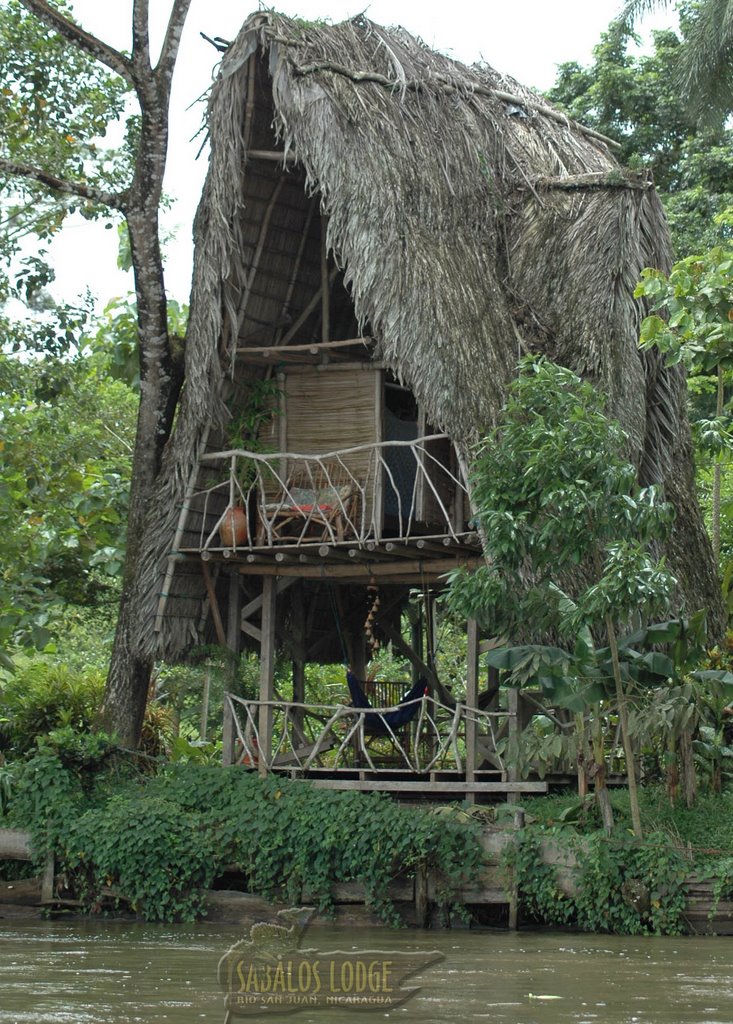
We are staying in the Tarzan cabana, a t-frame thatch hut located on the riverbank. We arrived to the sound of howler monkeys and entered a world of hummingbirds, salamanders, caimans and another assortment of forest life. On the upper level of our hut, we have a bedroom, bathroom and a balcony with a bench that look out right over the water. Downstairs, we have a pair of hammocks, where we can rock from side to side while taking in a bird’s eye view of the river and the green forested shore beyond.
The friendly local owner, a former Sandinistan general, treated us to juice made with small oranges upon our arrival, and later to sangria made from grapefruit, orange, lemon and jackfruit grown on his own farm.
Again, sleep with come early tonight. With no multimedia and light attracting bugs, it makes more sense to go to bed early and rise at dawn for a new set of activities.
I’ll walk back to our hut along a path lit by lemon-scented torches, listening to the music of cicadas and the croaking of frogs.
**the photos are of the blue jean dart frog, a caiman, and our riverside Tarzan cabana (which, by the way, is where Mark proposed)
El Castillo

October 3, 2006
El Castillo, a remote outpost, population 1800, on the San Juan River, is my favorite place in Nicaragua so far, and one of my favorite places ever. WE have only one night here. But I’d love to return, spend days reading and writing on the balconies overlooking the river, listening to the hum of insects and rumble of rapids, and eat fresh fish and coconut bread daily.
It required a long journey to arrive here. We lined up for boat tickets at Granada’s dock yesterday at 11, then returned to board at 2. Despite a 3 p.m. departure, we were among the last to arrive and first class was nearly full, relegating us to seats on the end of a table for six.
First class passage to San Carlos, which cost $7, meant a spot in the overcrowded upper deck. Five sets of benches, divided by a table, plus two straight benches were in a small, air-conditioned room.
The experienced passengers not only saved themselves room on a bench, but they brought a hammock or comfy chair to string up on deck, or a mattress to claim corner sleeping space.
We pushed off from Granada and I watched it recede, a view of yellow and pink colonial arches and building, a shore lined with palms and coconut trees. In all directions, a thick green forest spread away from Granada, rising up to the cloud-covered volcanoes, shadowed by rain in the distance.
People passed the time reading, playing games, watching TV, trying various ingenious positions to sleep or eating. I ventured down to second class, where a woman served cold sodas, chips and chicken with rice and fried plaintains through a window. She could look out at the second class passengers packed into hard wooden benches, the floor below wet and grimy.
We made a stop at Ometepe, an island with two volcanoes in the middle of Lake Nicaragua (Cocibolca). There, men carried aboard large baskets of plantains and watermelon for shipment.
At a 3:30 a.m. stop at San Miguelito, on the opposite coast, children came through the boat selling coffee with milk, tortilla with cheese, bread, as though being on the docks, selling in the middle of the night, was a natural activity for them.
The floor in first class was more or less clean. So as it got later, more people dipped onto it. I went down to the cold and hard floor first. Mark later switched places with me. I wished I could have taken a photo of first class, Nicaraguan style, with bodies curled under tables, laid out in aisleways or spread across benches. Those who’d strung their hammocks on the side of the boat had to cover themselves with sheets of plastic as protection from the rain.
I woke up to smooth waters, a calm sky, a pastel world holding the green pearls of the Solentiname islands. We disembarked in San Carlos, a muddy, colorful, decrepit town, surprisingly active at 6:30 in the morning. We found a place to sit at the plastic chairs and tables of a small comedor. There, we could watch the locals eat large, fried breakfasts of gallo pinto – fried eggs, beans and rice, meat or fried cheese, together with sweet iced fruit drinks or cups of coffee – and the bus attendant receiving one after another large bundle of squawking chickens from the top of the bus and dropping them gently in the mud for passengers to claim.
We boarded a 50-passenger covered longboat for the 2.5 hour trip down the San Juan river to El Castillo, the end of this route. The San Juan river runs along the border between Nicaragua and Costa Rica and connects the Atlantic Coast with Lake Nicaragua. It used to be an active route for transporting gold and other goods, as well as a popular roaming ground for pirates. At one time, it was considered as the most logical place to create a canal cutting across Central America.
We’d only passed one sizeable settlement on the way, the riverside town of Sabalos. El Castillo lay at a bend in the river about 20 minutes further, just before a series of rapids. Until recently, when San Carlos-San Juan del Norte boat service resumed, El Castillo was the end of the line.
We stayed in the Hotel Albergue El Castillo, a two-story wooden hotel overlooking the water. Owned by the mayor’s office, it had wonderful hammocks and rocking chairs on the balcony, where one can fall asleep to the rush of rapids.
There we learned that the majority of visitors are European. Despite the much closer proximity compared to Europeans, only 8-10% of the hotel guests are Americans.
“I suppose the Americans aren’t as interested in eco-tourism,” the hotel attendant theorized.
After a wonderful lunch of rubalo (a fish that swims upriver from the ocean into Lake Nicaragua) we went to visit the crumbling stone fortress, El Castillo’s hilltop sentinel.
El Castillo de la Inmaculada Concepción de María was built by the Spanish in 1675 to protect Spanish settlements (including Granada, on the lakeshore) from pirate attacks. At the time, it was the largest fortress in Central America, with 32 cannons and 11,000 weapons.
In 1762 it was the site of a major battle between the Spanish and British in the Seven Year War. A 19-year-old woman, Rafaela Herrera, seized command of her father’s troops after he died and succeed in driving the British off.
In 1780, Horatio Nelson successfully captured the fort by arriving on foot. But after nine months there without reinforcements, he and his sick soldiers went home. We then strolled through the streets of El Castillo.
Accessible only by boat, El Castillo had one central street, or rather a walkway, of alternating stone and concrete. Wooden homes, shops and hostels on stilts lined it, painted green, blue, red, yellow, pink and grey. The children played on swings and slides along the riverbank and wore blue and white uniforms to the hillside school, set among palms and tropical foliage.
The place gave me such a feeling of calm and relaxation. It felt removed, safe, beautiful and unique. I dreamed of returning again some day, to spend a whole week reading and writing from a hammock, eating fresh fish daily.
By six, darkness fell. And by 8:30, the entire town had gone to bed. I joined them, closing my eyes to the sound of the nighttime insects, letting my thoughts flow with the water outside.
Granada
October 2, 2006
Mark and I began our adventure in Nicaragua today with a volcano andCanopy tour. I appreciated both getting out of Nicaragua and lettingourselves be led about by professionals. It was the kind of slower pace and care I needed after my nasty incident on Friday night. My black eye is shining nicely today, but there are plenty more compelling things tolook at in this area.
A canopy tour is a series of ziplines and platforms set up in thetropical forest. The first one, which is the one we visited, was setup by a Canadian. The idea came from the man featured in the movie,The Medicine Man. Tired of going up and down trees, looking for theplants that could cure illnesses, he set up some ziplines that wouldallow him to glide among them. And now tourists can enjoy the fun.
We lumbered up an extremely rough and rocky road, past coffeeplantations and farms that raised peliguey – a funny lookingcombination of a sheep and a goat, made in Cuba, and supposedlydelicious barbequed.
The staff at Mombotours was very professional and safety cautious.We had four guides for only four tourists and they basically dideverything for us – outfitted us in harnesses and chains, gave us ashort explanation, and then hooked us and unhooked us at each stage ofthe journey.
All we had to do was let go of fear and slide along the cables, ourfeet brushing through the tropical leaves, our yells sounding like thehowler monkeys we saw upon arrival. It was great fun to slide overdense greenery, to move through it as the animals might, and to viewit from a different angle. Many of the trees we landed on were giant, majestic species - guyavon, ceiba and royal cedar.
We travelled a total of 600 meters on the course, then had a nicerappel at the end. Walking back to the lodge, which looked out overLake Nicaragua (also called Cocibalca), we passed coffee bushes,avocado and grapefruit trees, banana and cocoa plants. We picked red coffee beans and sucked on the sweet seeds. Our guide, Jay, took acocoa pod. At the lodge, he opened it and instructed us to suck onthe sweet white covering on the cocoa beans, which tasted like alittle red spiky fruit I´ve had here.
From there, we drove to the Mombacho volcano, my first volcano visitin Nicaragua. We entered the park and drove up the steep road to theedge of a crater. In the 1980s, this area had been a military base.But funding from the U.S., Britain and France helped turn it into atourist area, which according to Jay, has been very successful.
At 1150 meters, the air was fresh and clean, a light breeze blowing,the cloud forest greenery covered by dew. Jay led us along a patharound the crater, pointing out various plant life. We saw manybromedias, the candlestick-like plants that can hold up to three orfour liters of water. Salamanders sit inside of them waiting to catchtheir prey. Its because of these plants that the forest stays wetcontinually. We saw sleeping plants, that fold up upon touch, the colaliyo, whose leaves are used for hats, and the orange bird ofparadise, on which hummingbirds feed.
We visited the smoke holes, where hot steam continued to rise, eventhough the last eruption was in 1575. And we enjoyed a wonderful viewof Granada, Lake Nicaragua, the isletas (a series of small islands inthe lake) and the nearby volcanic lake, warmed by the underground steam.
In town, I tried the Granada specialty, yucca, fried pig skins andvinegared cabbage served on the leaf of a plant we saw on the Mombachovolcano.
Yellow, pink, ivory and blue colonial buildings fill the town, wherehorse-drawn carriages roll by, as well as a tacky train, filled with local tourists. On the central square, I watched a vendor scoop ahomemade chocolate drink into a plastic bag, put in a straw, tie itinto a knot, and hand it to two little girls, who bent their heads together to eagerly suck.
Mark and I began our adventure in Nicaragua today with a volcano andCanopy tour. I appreciated both getting out of Nicaragua and lettingourselves be led about by professionals. It was the kind of slower pace and care I needed after my nasty incident on Friday night. My black eye is shining nicely today, but there are plenty more compelling things tolook at in this area.
A canopy tour is a series of ziplines and platforms set up in thetropical forest. The first one, which is the one we visited, was setup by a Canadian. The idea came from the man featured in the movie,The Medicine Man. Tired of going up and down trees, looking for theplants that could cure illnesses, he set up some ziplines that wouldallow him to glide among them. And now tourists can enjoy the fun.
We lumbered up an extremely rough and rocky road, past coffeeplantations and farms that raised peliguey – a funny lookingcombination of a sheep and a goat, made in Cuba, and supposedlydelicious barbequed.
The staff at Mombotours was very professional and safety cautious.We had four guides for only four tourists and they basically dideverything for us – outfitted us in harnesses and chains, gave us ashort explanation, and then hooked us and unhooked us at each stage ofthe journey.
All we had to do was let go of fear and slide along the cables, ourfeet brushing through the tropical leaves, our yells sounding like thehowler monkeys we saw upon arrival. It was great fun to slide overdense greenery, to move through it as the animals might, and to viewit from a different angle. Many of the trees we landed on were giant, majestic species - guyavon, ceiba and royal cedar.
We travelled a total of 600 meters on the course, then had a nicerappel at the end. Walking back to the lodge, which looked out overLake Nicaragua (also called Cocibalca), we passed coffee bushes,avocado and grapefruit trees, banana and cocoa plants. We picked red coffee beans and sucked on the sweet seeds. Our guide, Jay, took acocoa pod. At the lodge, he opened it and instructed us to suck onthe sweet white covering on the cocoa beans, which tasted like alittle red spiky fruit I´ve had here.
From there, we drove to the Mombacho volcano, my first volcano visitin Nicaragua. We entered the park and drove up the steep road to theedge of a crater. In the 1980s, this area had been a military base.But funding from the U.S., Britain and France helped turn it into atourist area, which according to Jay, has been very successful.
At 1150 meters, the air was fresh and clean, a light breeze blowing,the cloud forest greenery covered by dew. Jay led us along a patharound the crater, pointing out various plant life. We saw manybromedias, the candlestick-like plants that can hold up to three orfour liters of water. Salamanders sit inside of them waiting to catchtheir prey. Its because of these plants that the forest stays wetcontinually. We saw sleeping plants, that fold up upon touch, the colaliyo, whose leaves are used for hats, and the orange bird ofparadise, on which hummingbirds feed.
We visited the smoke holes, where hot steam continued to rise, eventhough the last eruption was in 1575. And we enjoyed a wonderful viewof Granada, Lake Nicaragua, the isletas (a series of small islands inthe lake) and the nearby volcanic lake, warmed by the underground steam.
In town, I tried the Granada specialty, yucca, fried pig skins andvinegared cabbage served on the leaf of a plant we saw on the Mombachovolcano.
Yellow, pink, ivory and blue colonial buildings fill the town, wherehorse-drawn carriages roll by, as well as a tacky train, filled with local tourists. On the central square, I watched a vendor scoop ahomemade chocolate drink into a plastic bag, put in a straw, tie itinto a knot, and hand it to two little girls, who bent their heads together to eagerly suck.
A Warning Regarding Taxis in Managua
September 30, 2006
This is not meant to scare visitors away from Nicaragua. Outside of the capital, Nicaragua is filled with splendid greenery, culture, natural and historic places.
But Managua is not a pleasant place and I advise skipping it if possible. If you absolutely must spend time in Managua, then be very careful when choosing your transportation.
I’m writing about taxis because I was assaulted and robbed in a taxi yesterday. But knife-point robberies are said to occur on buses.
The typical Nicaraguan taxi picks up more than one passenger at a time. Whoever gets in second or third may have to go out of their way before reaching their destination, but the price is correspondingly reduced.
Yesterday I got into a taxi that already had a passenger in the front. The man was counting his money and, I assumed, preparing to pay and get out soon. I sat alone in back, behind the driver, where I (mistakenly) felt more safe. After we started off, the driver locked the door behind the passenger, which I thought was strange, but figured he must be doing it for safety. Robbers have been known to enter cars, especially when stopped at stoplights. My door, however, remained unlocked.
Not long afterwards, and with incredible speed, the passenger jumped back on top of me and began punching me in the head. He pulled my shirt over my face to keep me from seeing and I found myself in total blackness, trapped in a car with two strange men, and being beaten. The second I saw him flying towards me with a grunt, I began to scream, a loud, insistent, instinctual scream of terror. Not knowing what they would do to me, nor if I would even survive, I was truly terrified.
He yelled at me to shut up and beat me harder. I remembered my unlocked door and tried to find and reach the handle in the blackness, but he’d trapped my left arm and I couldn’t move.
He began to ask what I had – how many dollars, cordobas, did I have a cellular phone. I had all that – plus more – a camera, an ipod, an electronic dictionary, souvenirs, a backpack. And I was unusually loaded, as I’d planned to treat my colleagues to dinner that night and needed to change money for my upcoming travels.
At this point, it seemed their main motive was robbery which was a comparative relief. I’d give them everything to not touch me or to take my life. I told them, from under my shirt and under the weight of his body what I had – begged them to take it all, to let me out.
It became clear the robber and driver were a team. They told me they were taking me outside the city, said I needed to keep quiet and cooperate if I didn’t want to be killed.
The robber, who said he was from El Salvador, and asked where I worked, gave the driver directions. He also said, to my relief, that my body didn’t interest him. The driver gave the robber instructions – Take her shoes.
He pulled off my shoes and my watch, felt for rings or necklaces, felt for money hidden elsewhere on my body. I understood they would probably clean me dry, then dump me somewhere. I imagined a remote rural area, a dangerous barrio. I imaged they’d roll me out while moving at full speed and again the terror intensified. I asked them to please stop before pushing me out.
They did slow to a near stop and did push me out onto the road. I was barefoot, my shirt over my head, shaking and disoriented. I had nothing but 10 pesos (about 50 cents) I happened to be holding in my right hand.
When I staggered up to a security guard watering the lawn, he told me where I was. Luckily, it was a decent area. And luckily, I came across the guard first, because the next figure I saw was a guy walking down the street with a baton.
I told the guard what happened and he helped me to get another taxi. He told me when he’d first seen me walking towards him, he’d thought I was crazy.
I had no money, no key to my home, no cell phone, and no ones numbers memorized. If I hadn’t been on my way to meet colleagues for dinner, I don’t know what I would have done. Since they were waiting for me, I was able to take a taxi to them, ask them to pay for the taxi, and ask for their help in canceling my credit card, getting shelter, etc.
In summary, it was a frightening and miserable experience. When in Managua, it’s preferable to have a car and driver. If that’ s not possible, ask anyone you know there for names and numbers of known, trustworthy drivers. Or, use only radio-controlled taxis offered by a reputable hotel – which will cost more, but are reliable. Barring any of that, never get in a cab in Managua with other passengers, and tell the driver you want express service (which will cost a little more). This means he can’t pick up other passengers while you are in the car.
Ideally, especially if you are alone, it’s good for someone to walk you to the taxi and to note the car number. In case of last resort, choose cars only with the newest taxi plates (3 horizontal stripes) and note the taxi number before getting in.
The risk is real and for your health and safety, Managua is a city in which one must take precautions.
This is not meant to scare visitors away from Nicaragua. Outside of the capital, Nicaragua is filled with splendid greenery, culture, natural and historic places.
But Managua is not a pleasant place and I advise skipping it if possible. If you absolutely must spend time in Managua, then be very careful when choosing your transportation.
I’m writing about taxis because I was assaulted and robbed in a taxi yesterday. But knife-point robberies are said to occur on buses.
The typical Nicaraguan taxi picks up more than one passenger at a time. Whoever gets in second or third may have to go out of their way before reaching their destination, but the price is correspondingly reduced.
Yesterday I got into a taxi that already had a passenger in the front. The man was counting his money and, I assumed, preparing to pay and get out soon. I sat alone in back, behind the driver, where I (mistakenly) felt more safe. After we started off, the driver locked the door behind the passenger, which I thought was strange, but figured he must be doing it for safety. Robbers have been known to enter cars, especially when stopped at stoplights. My door, however, remained unlocked.
Not long afterwards, and with incredible speed, the passenger jumped back on top of me and began punching me in the head. He pulled my shirt over my face to keep me from seeing and I found myself in total blackness, trapped in a car with two strange men, and being beaten. The second I saw him flying towards me with a grunt, I began to scream, a loud, insistent, instinctual scream of terror. Not knowing what they would do to me, nor if I would even survive, I was truly terrified.
He yelled at me to shut up and beat me harder. I remembered my unlocked door and tried to find and reach the handle in the blackness, but he’d trapped my left arm and I couldn’t move.
He began to ask what I had – how many dollars, cordobas, did I have a cellular phone. I had all that – plus more – a camera, an ipod, an electronic dictionary, souvenirs, a backpack. And I was unusually loaded, as I’d planned to treat my colleagues to dinner that night and needed to change money for my upcoming travels.
At this point, it seemed their main motive was robbery which was a comparative relief. I’d give them everything to not touch me or to take my life. I told them, from under my shirt and under the weight of his body what I had – begged them to take it all, to let me out.
It became clear the robber and driver were a team. They told me they were taking me outside the city, said I needed to keep quiet and cooperate if I didn’t want to be killed.
The robber, who said he was from El Salvador, and asked where I worked, gave the driver directions. He also said, to my relief, that my body didn’t interest him. The driver gave the robber instructions – Take her shoes.
He pulled off my shoes and my watch, felt for rings or necklaces, felt for money hidden elsewhere on my body. I understood they would probably clean me dry, then dump me somewhere. I imagined a remote rural area, a dangerous barrio. I imaged they’d roll me out while moving at full speed and again the terror intensified. I asked them to please stop before pushing me out.
They did slow to a near stop and did push me out onto the road. I was barefoot, my shirt over my head, shaking and disoriented. I had nothing but 10 pesos (about 50 cents) I happened to be holding in my right hand.
When I staggered up to a security guard watering the lawn, he told me where I was. Luckily, it was a decent area. And luckily, I came across the guard first, because the next figure I saw was a guy walking down the street with a baton.
I told the guard what happened and he helped me to get another taxi. He told me when he’d first seen me walking towards him, he’d thought I was crazy.
I had no money, no key to my home, no cell phone, and no ones numbers memorized. If I hadn’t been on my way to meet colleagues for dinner, I don’t know what I would have done. Since they were waiting for me, I was able to take a taxi to them, ask them to pay for the taxi, and ask for their help in canceling my credit card, getting shelter, etc.
In summary, it was a frightening and miserable experience. When in Managua, it’s preferable to have a car and driver. If that’ s not possible, ask anyone you know there for names and numbers of known, trustworthy drivers. Or, use only radio-controlled taxis offered by a reputable hotel – which will cost more, but are reliable. Barring any of that, never get in a cab in Managua with other passengers, and tell the driver you want express service (which will cost a little more). This means he can’t pick up other passengers while you are in the car.
Ideally, especially if you are alone, it’s good for someone to walk you to the taxi and to note the car number. In case of last resort, choose cars only with the newest taxi plates (3 horizontal stripes) and note the taxi number before getting in.
The risk is real and for your health and safety, Managua is a city in which one must take precautions.
Another period without photos
September 29, 2006
Due to a robbery in a taxi on this day, I lost the blog entries I was preparing, as well as my camera. So I no longer have anything to post about my very interesting visit to the rural, mountainous, Rio Blanco, my motorcycle-ride, horseback-ride and hike up to visit a remote cattle farmer, or the fun evening birthday celebration a local employee invited me to for his daughter.
I’ll also be without photos, until I’m able to replace the camera. Two cameras lost in two months. I’m not batting very well.
Due to a robbery in a taxi on this day, I lost the blog entries I was preparing, as well as my camera. So I no longer have anything to post about my very interesting visit to the rural, mountainous, Rio Blanco, my motorcycle-ride, horseback-ride and hike up to visit a remote cattle farmer, or the fun evening birthday celebration a local employee invited me to for his daughter.
I’ll also be without photos, until I’m able to replace the camera. Two cameras lost in two months. I’m not batting very well.
Typical Nicaragua

September 17, 2006
I returned to Nicaragua after a weekend away and immediately felt right back at home. The taxi driver I had asked to pick me up at the airport didn’t seem to be there. I found another (who was very responsible and nice). But, typically, he had to stop at the gas station on the way. Managua drivers, rather than putting their fares into gas, drive on empty and seem to put in only enough to get themselves to the destination of their current order. I’m not sure why this is (lack of funds, fear of gas theft?) but I should ask.
At the gas station, I went into the mini-mart to buy some milk. On my way out, a large white truck suddenly revved up and roared backwards. An empty beer bottle fell out of the cab and crashed against the concrete. I just missed being hit. My taxi driver, Jose, looked on open mouths. He refused to move until the truck left.
“Look,” he said, as the female driver got out, giggling and swaying and moved back into the cab. Her male companion took the wheel, holding a half empty bottle of Corona in one hand, staggering as he gripped the wheel and climbed into the cab. “They are drunk. It’s very dangerous.”
We watched the driver take another drink, hanging on to his open bottle. He looked through the window with rolling eyes.
“Isn’t anyone going to stop him?” I asked.
No. Jose said that if the police saw him, they’d stop him. “But there are few police in the city. So they usually come on duty at midnight. At 9 p.m., there were neither police, nor pedestrians, on the streets.
The white truck pulled out into the fast lane into town, accompanied by a minivan that Jose said was also driven by a drunk driver. If they want to risk their own lives, I say go ahead. But what I found unfortunate is that cars, pedestrians and bicycles would all be hostage to those giant vehicles, liable to spin out of control at any time left. If any one died, it would most likely be an innocent.
Also, typically for Managua, a light evening rain fell, and the lights were out, leading us to drive down black streets.
I asked Jose if the lack of electricity was seasonal.
“It’s only been a problem this year,” he said. “Before, we had enough.”
I felt fortune smiled upon me when I found electricity working in my apartment, leading me to not mind the lack of water so much.
Promising Exports
September 14, 2006
In 2005, Nicaraguan exports were $857.9 million, a 45-year high. Nicaragua had $600 million in the late 1970s. Exports then plummeted, as the country went through turmoil and war, not reaching the same level again until 2000.
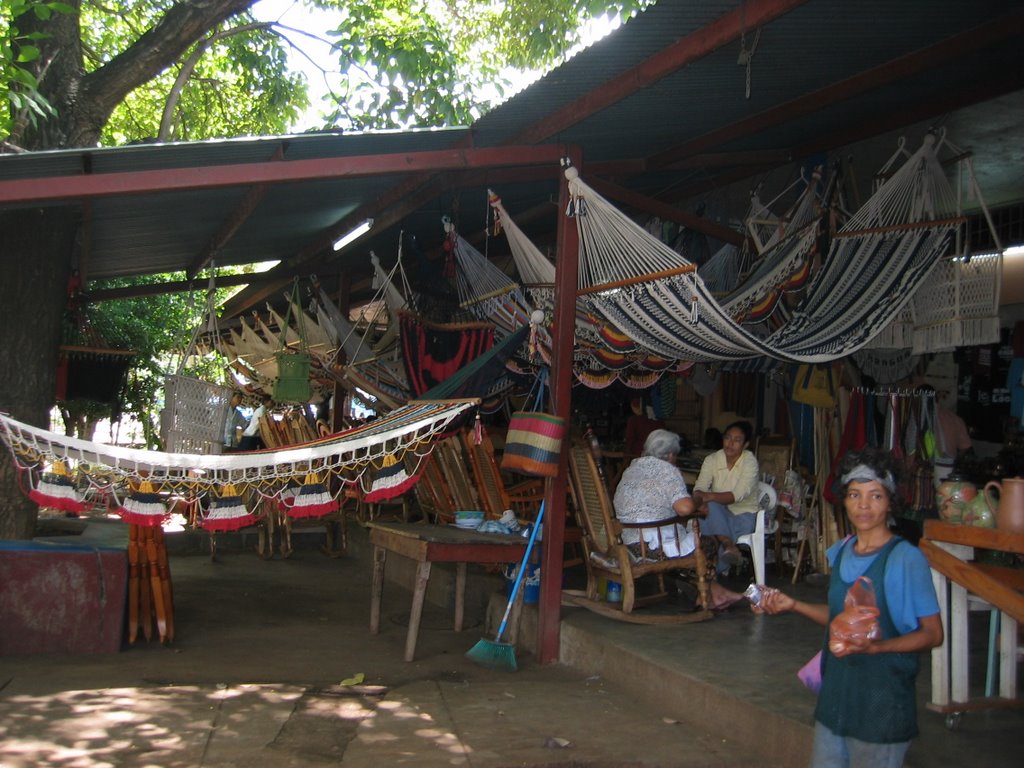
The leading export products are: peanuts, black beans, milk, gold, beef, shrimp, lobster, fish and hammocks (good stuff!:))
Other products gaining increased export share include: honey, melons, okra and watermelon.
Monday, October 16, 2006
Upcoming Holidays

September 13, 2006
Relating to the entry below, Awilliam today told me about the Sandinistas efforts to reduce illiteracy and poverty in the rural areas – by requiring high school and college students to spend five months in the most remote areas, teaching reading and another three months picking coffee or cotton.
Awilliam lived in a remote mountain village. He spent a short time picking cotton in the west of the country, but when the heat overcame him, he asked to transfer back to the mountains to cut coffee.
He didn’t seem to have very positive recollections of his service.
He recalled working together with several hundred other students in a coffee hacienda that had been confiscated from a well-to-do landowner.
“Every morning we were woken up at 4 a.m. to wash in the river. It was so cold! And the food was always the same – beans and tortillas for breakfast, beans, tortillas and egg for lunch. There were a lot of people who had stomach problems from so many beans. In the morning, we had to gather and sing the national anthem and the Sandinistan anthem.”
He began to sing it with a smile of derision. “We’ll fight against the Yankees and the enemies of humanity…”
“We wore military clothes and carried guns for protection. Sometimes we came across snakes or red-eyed frogs and the women’s screams echoes across the mountains.”
Looking at Awilliam’s gentle, intellectual face, the father of two daughters, it’s very hard to imagine him as a military and propagandistic tool of a political regime. But the faraway news that formed the distant reality of my junior high civics class was his life.
I asked why rural teachers couldn’t teach the illiterate in their communities to read.
“They could have,” he said. “But in addition to teaching people to read, the government wanted to make a show. They wanted to say, see, we are sending you people and making you a priority.”
The next two days are national holidays. Tomorrow is the anniversary of the 1856 battle of San Jacinto, the final battle of the 1856-57 National War. This was the battle in which many Nicaraguans, aided by Guatemalans and Costa Ricans, drove out William Walker, a nutty American who, as only one small event in the long history of US intervention in Nicaragua, had himself installed President, made English the national language and legalized slavery. This battle finally drove him out.
The 15th is Independence Day, when Nicaragua, and other Central American countries, received their Independence from Spain in 1821.
Sunday, October 15, 2006
The Causes of National Poverty in Nicaragua

September 13, 2006
Today, La Prensa newspaper carried an editorial that listed the 11 main causes of national poverty in Nicaragua. I thought I’d share them with you, summarized and translated into English. The piece was written by Edmundo Davila Castellon, a civil engineer and graduate of Incae (I believe that is a respectable university here).
1. Complete disregard for the national demographic explosion at 2.7% annually. Nicaragua has had the highest population growth in Latin America.
2. Megasalaries, pensions and benefits, which affect the transport, education, health and work opportunities (cost and availability) for others.
3. The national budget, which doesn’t take care of the population’s social needs.
4. Peasants migrating from the countryside to the city.
5. Degradation of animals, plants and nature.
6. Internal and external debt.
7. Ungoverability and political, social and economic factors that directly affect the economy, social peace and national and foreign investment.
8. Illiteracy and the lack of basic education
9. Frozen pensions, which don’t take into account devaluation or inflation.
10. Problems with property rights
11. Government corruption and wars
Any thoughts on the validity of this analysis? Are there causes that have been omitted?
Saturday, September 16, 2006
Food and drink in Nicaragua
 September 12, 2006
I have the depressing admission to make that I ate lunch at McDonalds today. I wasn’t able to get out for lunch until quite late, and the only places nearby are a McDonalds, a Subway and a supermarket. This comes as quite a shock for someone used to fast-food-free Kyrgyzstan.
Here, there is a fried chicken chain on just about every corner. Sodas have made their incursion in the same way they have in the U.S., while in Kyrgyzstan, people main drink soft drinks only during parties and special occasions.
With even the local food leaning heavily on the fried side, it’s no surprise that obesity is an issue here.
“She’s a bit fat,” one man told me today, explaining why he thought a 63-year-old woman was healthy and would live a few more years.
“It’s only here in the Caribbean that people consider being fat to be healthy,” his boss, Armando, said. “But really, they could have a heart attack at any time. And it’s largely due to our diet and its effects on our health that our life expectancy is only 60.”
Right now, one city, Leon, is suffering tremendously from people taking in an unhealthy beverage. Aguardiente, an alcoholic drink similar to rum, but without the mandatory four years aging, is drunk mostly by alcoholics and the poor.
Vendors of this drink buy it in 55 gallon drums. And to each five gallons, they might add a gallon of water, increasing their earnings by diluting it. If they add too much water, they add a bit of methanol in order to retain the alcohol level.
Recently, someone added too much methanol, and people (mostly men) are falling by the dozens. Last I heard, 36 people had died. The hospital in Leon is full and patients are being transferred to Managua. The U.S. military has donated supplies and the front page news story today was that an antidote to the effects of methanol was acquired and being administered to the patients. Those who survive could face blindness or the ruination of their digestive systems.
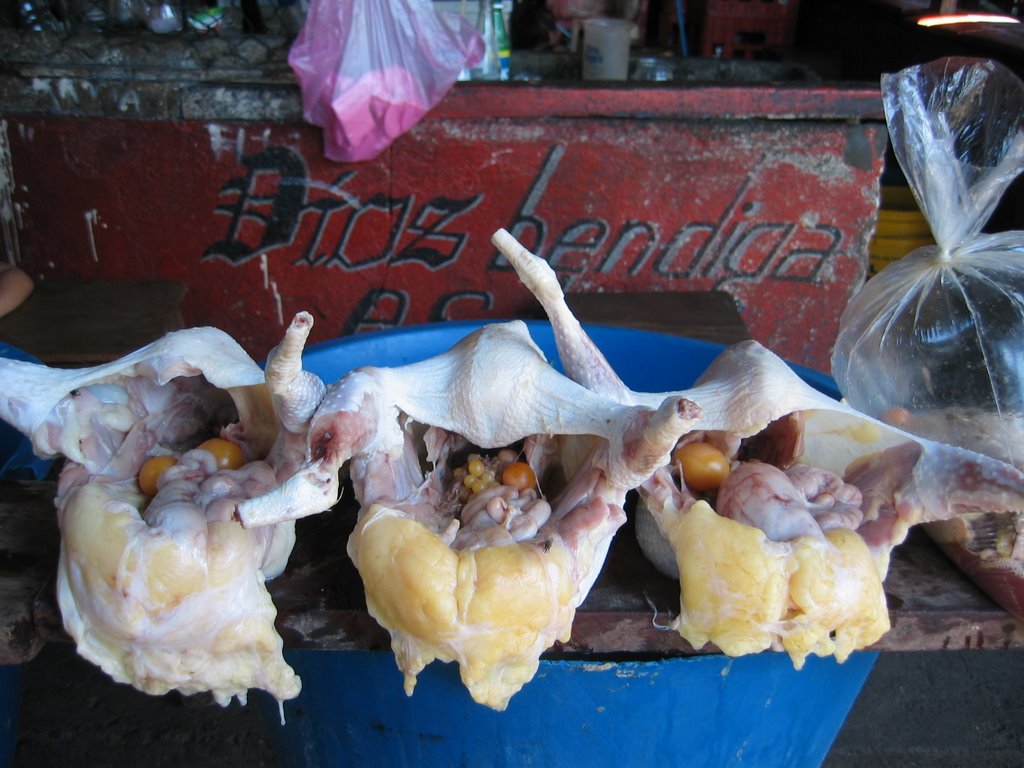
I also learned today about a restaurant not far from my house that makes a famous sopa levantomuertos (soup to raise the dead). It’s only served from 8 p.m., contains lobster, fish and shrimp, and is served very hot, in order to sweat out alcohol. After drinking and dancing, when people are drunk and feel they can’t take any more, they order this soup and suddenly regain the strength to continue dancing throughout the night.
Hairy pig skin, methanol laced homemade alcohol, soup that makes one sweat. Yum yum.
One week after being virtually paralyzed by my lack of speech, I can now communicate. I understand most of what’s being said. I can read the local newspaper And while I think I still sound like an idiot, I can more or less get my points across.
Russian words dot my speech frequently. But other times, I try to think of a word in Russian and find I can’t reach beyond the Spanish. It will probably be another struggle to adjust when I return to Kyrgyzstan and find myself using Spanish words in the place of Russian.
At home (or not) in the city
 September 11, 2006
Yesterday I tried to take my first walk and didn’t have much luck. I got lost (even going a short distance). Yes, the guidebook is right. There are no landmarks in this city and no center. I didn’t have any real problems. But I didn’t feel safe.
A lot of men whistled at me and made smooching sounds or under the breath comments. I haven’t experienced that since high school. And it’s a strange, and unwelcome change, from Kyrgyzstan, where no one harasses me in any way. They consider me much too old to warrant any attention in any case.
I felt I had to take my watch off, even though it’s not of any significant value. After I put it in my pocket, I continued to look around me vigilantly, feeling obvious and out of place on the quiet Sunday streets.
I learned that Sunday is the day of rest and most businesses are closed. Even in the middle of the day, the streets are virtually empty.
I made a mini-project for myself to learn the bus routes, thinking that would force me to pay more attention to my surroundings, to learn my way around, and to have more contact with the people I feel too separated from.
That worked relatively well. I took two buses yesterday. I got off of one too early, and ended up needing to take a taxi. But at least I learned something in the process.
Today, during my lunch break, I went out to a nearby market to start buying souvenirs for my Kyrgyz colleagues. I told the guard I was taking a look at the market and left. I asked passersby where the handicrafts section was, found it, and was doing just fine when I suddenly noticed the wide-hipped cleaning lady at my side. Someone had sent her after me, to mind me, to take care of me.
She immediately instructed me to take off my watch, and to be careful with the plastic bag I carried. I appreciated the sentiment of her protection. But her presence made it impossible for me to shop. Could I spend $10 on a painted box for my niece knowing that she likely earned less than that in a day? No. So I bought something cheaper.
She led me to a Jamaican café for a quick fritanga – fried platter of stewed chicken with black beans and fried plantains. And when they didn’t have Diet Coke, she went out and brought one to me. Only when I convinced her I could make it the several feet back to the office on my own did she leave.
I am allowed to walk the ten minutes to work. But then am shepherded from the office to another office and back home. Everyone I have contact with seems to know where I am at any one time. While this is very nice from a security perspective, it unfortunately leads me toward the more typical expatriate lifestyle, of living a life outside of and beyond the local community. I haven’t had a chance to have extended conversation with anyone besides my colleagues, so Awalter, my Spanish teacher, has become my main window into the culture.
Today during Spanish class, Awilliam told me he loves chicharon, fried pig skin.
“Have you tried it?” he asked.
I said I hadn’t. But I’d be interested in trying it if it was locally popular.
“I have some right here!” he said. And to my surprise, he unzipped his black portfolio. He popped a skin into his mouth, with a crunch, and handed one to me.
I took a bite of the hard, crunchy thing and didn’t like it especially.
“Is this a pig hair?” I asked him, looking at a small red hair on the skin.
“Yes,” he said, seeming embarrassed, as though it wasn’t supposed to be there. “But it’s been well fried.”
“And this too?” I asked, finding one more, and then several others. The hairs made it too easy to imagine the pig’s paw and I found it pretty gross. I put it to the side of my papers during the lesson, then gave it back, thanking him for the experience.
A visit to the city center

September 10, 2006
I was pretty bummed out to be here a week and feel as though I really hadn’t seen anything of the city. So today, I organized a conversational Spanish lesson and arranged for it to be held somewhere in the city.
Awilliam picked me up in his 1981 Datsun truck. None of the indicators – speed, temperature, gas – worked, to roll down my window, he attached the crank, then removed it, and opening the door required a punch in a certain location of the door. But I was excited to get out and see something – anything.
His plan was to take me to Revolution Plaza. But the main road was closed off, due to a motorcycle race and we had to take a detour.
We went through what Awilliam said used to be old Managua. Until the earthquake of 1972, it was the center of town and filled with multistory buildings. But now mostly one-story homes of low-income residents fill it. Even these are built with steel rods to weather future earthquakes. Awilliam said that parts of Managua lie directly on faults.
Early on a Sunday morning, there wasn’t much activity at the Revolution Plaza. But I saw the most attractive collection of buildings I’ve seen so far in Managua.
We stood in front of the old cathedral, where two guards kept visitors at bay and the birds living inside tweeted contentedly.
“It’s their palace,” Awilliam said.
It had been heavily damaged in the earthquake of 72 and Awilliam said that pieces can come tumbling down at any time. It seemed to be a dangerous job for the two guards.
A still, round fountain stood in between the church, the yellow and sand-colored Presidential offices, the ivory National Museum, and a deteriorating park. This fountain, Awilliam said, used to be very beautiful. And in order to tell me the story, he filled me in on the past several decades of Nicaraguan history.
At the time of Nicaraguan independence, in 1921, there were two parties, the Liberal and the Conservative Party. The conservative party almost always held control. In 1893 the Liberal Party sponsored a revolution, wanted more changes. Among their achievements were bringing coffee to Nicaragua for production and export. By the mid 1950s, Nicaragua had good roads, plenty of work and a strong currency.
But at that time, the hippies set the fashion. And when the Cuban revolution took place in 1959, the Liberal party no longer seemed to be on the forefront of change. The future was with Castro and with the Soviet Union.
A group of Nicaraguans went for ideological and military training in socialism. These people later founded the FSLN (the Sandinistan Front for National Liberation), which opposed the Liberal party. They began a guerilla war, which drove President Samosa out of office in 1979.
When the FSLN assumed power, they moved to the extreme left, forming close relations with Castro and Qaddafi, confiscating homes and land from the rich, jailing and killing people with other ideas.
The people didn’t want an extreme government, so they began a contra-revolution, which the U.S. assisted. Wars began in Guatemala, El Salvador, Honduras, Colombia, Bolivia and Peru.
“Nicaragua served as a bridge for transporting arms to this different wars,” Awilliam said. “The U.S. knew Cuba could be controlled because it was an island. But Nicaragua had the possibility to spread these problems throughout the region.”
In 1985 the population asked for elections. The FSLN agreed, but only allowed the FSLN, Socialists and Communists to run. The FSLN won.
By 1989, the war was serious. Young men were drafted from schools and universities, sent to fight without any experience, died.
“The mothers and fathers looked ahead to the future and saw that their children would die in battle. They didn’t want war anymore,” Awilliam said. So they asked the Organization of American States and the UN for pluralistic elections with observers.
The FSLN gave permission to anyone who wanted to form a political party. Despite the continued danger of opposing the regime, 14 parties were established.
“No one could speak openly,” Awilliam said. “On each corner stood CDSs, members of the Committee in Defense of the Sandinistas. They were the eyes and ears of the Revolution. They could kill anyone they thought was against the Revolution.”
The parties recognized that without uniting, they couldn’t defeat the FSLN, which controlled all the countries resources. So in September of 1989, they formed into a single party, Party UNO, the Union of National Opposition.
UNO won the election and took power in 1990.
“It was very difficult for them though,” said Awilliam. “Because everything Nicaragua had was under FSLN control – the police, the army, transport. They couldn’t just change the leaders because there were masses of people under them still loyal to the FSLN, who could organize coups. They decided to leave the leaders in place, to try to change them little by little.”
In the 1995-96 elections, UNO disappeared and the 14 parties competed separately. The Liberal Party won, based on the progress it had made during its former rule. The President, Arnoldo Aleman, obtained investments, built new hotels and tourist structures, and created the National Museum, the Presidential offices, and the fountain we were looking at.
“But he had a problem,” Awilliam said. “He stole money. There was a lot of corruption.”
By 2001, the population, tired of the corruption, was ready to vote FSLN back into power. Until the events of September 11th. After the attack on the World Trade Center, FSLN leader Daniel Ortega was interviewed on TV. He congratulated Osama Bin Ladin, saying it was about time the U.S. experienced the same thing it did in other countries.
After that interview, President Bush said that if the FSLN won the election, the U.S. would immediately impose a blockage on Nicaragua, equal to those imposed on Cuba, Iraq and North Korea.
“The Nicaraguans knew what a blockade was like from the 1980s,” Awilliam said. “And they were afraid. Even the Sandinistas didn’t vote for the Sandinistas.”
So the former Liberal Party vice-President, Enrique Volanyos, became President.
“The fountain had expensive colored lights, streams of water, and speakers. But that wasn’t all,” Awilliam said. “The water and lights moved to the rhythm of the music. So when a particular symphony was played, the water and light flashed and moved to the music. People would gather at the park to watch and listen.”
However, in the last two biannual municipal elections, the Sandinistas won. And the Sandinistas ignored the fountain. When it broke, due to neglect, they didn’t want to repair it, because it had been created by the Liberals.
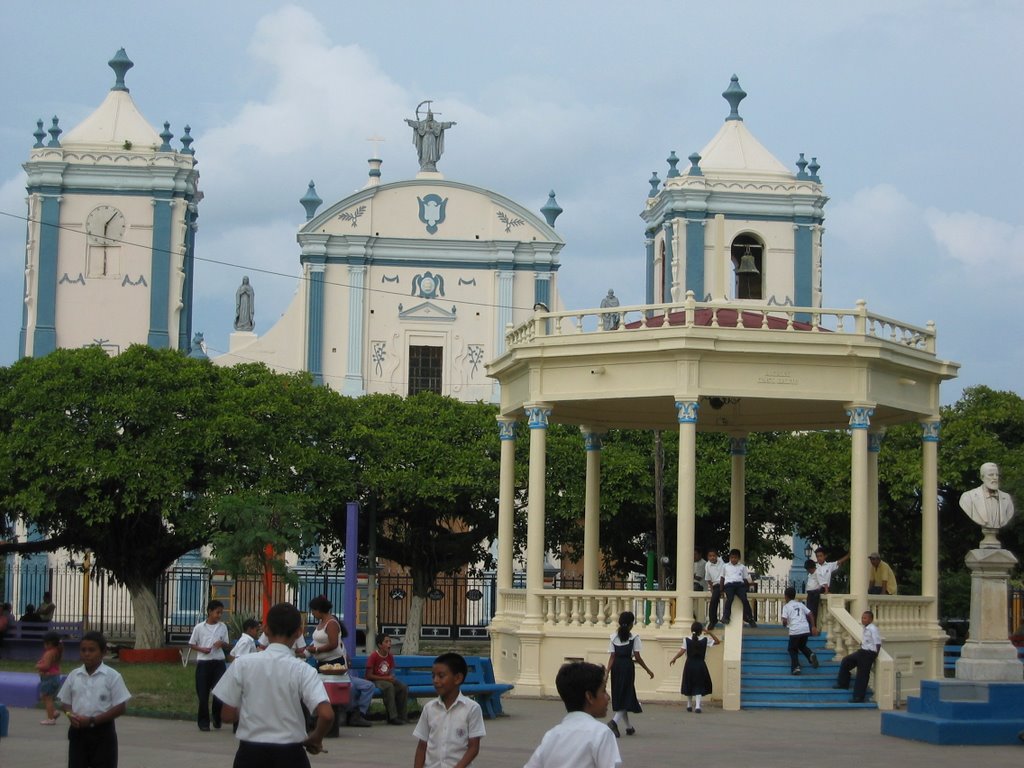
We walked to a nearby area, where we ambled along the top rows of a white bandstand. In one direction, I could look out at the obelisk built to honor Pope John Paul II, at a faded amusement park and young boys driving four-wheelers for rent, at a statue of Simon Bolivar, the liberator of the Americas, on a horse.
In the other direction, I looked out at the shores of Lake Xolotlan, polluted due to dirty water that has run into it from higher elevations, and a series of small lakeside cafes, where people gather to drink and dance in the evenings. A Cuban café played upbeat Spanish music, wild parakeets make a constant racket, and the smell of garbage filled the air, despite the impressive numbers of trash bins.
“The government keeps reminding people to keep their city clean. But they throw things on the ground anyway. It’s very difficult to change,” Awilliam said.
I looked out at culture, history, nature and amusement, at a place with so much potential. But it felt run-down, abandoned, stripped of its potential. Maybe it appears differently in the evenings, when concerts are in progress and the heat and spirit of the people liven the area up. But for now, it seemed emblematic of where Nicaragua is right now – a place of potential that needs a good push forward.
When I returned home, I turned on the TV. Awilliam had told me that channel 8 showed sensational local news. And when I came across it, the coverage struck me. A motorcycle, that had participated in the races we passed, hit some bystanders. One person died and four were injured.
The news camera came in for close-up shots of the stunned and hurt living, as well as the woman who’d died. According to the broadcaster, the heavyset woman lying face-down in the street, her legs splayed, her shorts ripped open, was a vendor named Dona Theresa. She’d been selling things to the bystanders and had been with a child, who wasn’t with her at the time of the accident. The camera zoomed in to where guts were spilling out of her knee, where the bike had probably run over her.
It was really distressing to see. It may be called censorship, but I’m glad the news in the U.S. doesn’t show such images. It didn’t do me any good to see that. I only found it disturbing to see the lifeless body of someone who rose this morning to work, trying to support her family. And it must be terrible for her relatives. The broadcaster seemed to expect her relatives to be watching.
“Her body is in the morgue, waiting to be identified by relatives,” she said. “Dona Theresa didn’t have any identification on her.”
Caught in the rain

September 9, 2006
Today at my Spanish lesson, my teacher, Awilliam, told me he’d missed the news last night.
“So today, when I went to the university to teach,” he said, “I found out that two of my students, sisters, aged 15 and 19, died in a house fire.”
He said it was caused by an electrical problem. The father had left early for work. The girls didn’t have classes that day and were still sleeping. The neighbors heard their screams from the second floor.
“Why couldn’t they jump?” I asked.
“Because, you know, in Nicaragua security is very important.” They’d had metal bars on their windows, to keep thieves out, but also to trap them in.
“Those on the first floor got out,” he said. “But those upstairs died.” He paused. “They were so young.”
At 4 p.m. today, I had my very first free time in the daylight, an hour or two to go see or do something in the city. I decided to visit the volcanic lake of Tiscapa. This crater lake, in the center of town, was supposedly very clean in the past. But during the Sandinista time, it was contaminated by another water source and is now said to be pretty nasty.
I’d read they had a canopy ride – something I think is like a cable that you attach yourself to and swing across the landscape and thought it would be fun to try.
Awilliam gave me a lift on the back of his motorcycle. Dark clouds gathered on one horizon and Awilliam commented on the approaching rain. I didn’t take it too seriously. Although it’s supposed to be rainy season, I haven’t actually seen a heavy rain yet.
We drove to an overlook where I could see the greenish brown water at the base of a forested crater. Kayaks paddled back and forth.
He dropped me off at the other side of the lake, at the park entrance. I walked uphill, past a series of bright white steps lined with tanks – a soldier’s memorial. A bolt of lightening crashed into the ground just ahead of me, causing me to tremble. By the time I’d neared the top of the hill, raindrops had begun to fall. Grey clouds covered half of the sky, while the other half was sunny and blue.
I expected the rain to pass quickly. I knew a canopy ride was no longer in the plan, but I wanted to explore the lake and the park a bit. So I huddled under an umbrella and wanted for it to stop. Instead, it only intensified. When I looked at the darkness of the sky, I realized it would probably take a while and started making my way downhill.
By this time, I was drenched. My pants were completely soaked, my sandals squeaked, sopping with water, and I could only dry to keep my backpack from getting too wet. Water coursed down the roads and ran in waterfalls off the roofs, and down a crumbling stadium.
I sloshed my way to the Crown Royal, a fancy hotel nearby, where I’ve just joined the health club. (I know, I feel very uncomfortable patronizing a ritzy hotel in a country this poor. But after going almost a whole week without a workout, I realized that for now, this is my only chance for getting some exercise). One of the benefits of the health club is access to the swimming pool. And they might have thought I’d jumped into the pool, fully clothed, as I dripped down their hallways.
The lightening continued to jolt the earth with such power, I worried about metal nearby, and could imagine being hit. Even the health club worker winced when a bolt landed seemingly just beyond the swimming pool.
“I think it was a hurricane,” my taxi driver later said, recommending not to walk in such powerful rain, because the roads turn into rivers. I’d been eager to see what makes the land so green and it showed itself with all it’s force. Not only could I visualize the source of the greenery, but I saw the powerful workings of the earth, the angry torrents that, along with other geological activity, whipped the earth into its shape of volcanoes, mountains, jungles, lakes and craters.
So I cut short my exploration plans with a short workout, a peek at the movie theater in a modern mall across the street, and then a few precious, extremely welcome hours to myself at home. I didn’t even mind that our storm knocked out our power, and that I’m writing this in blackness.
Thursday, September 14, 2006
First Day in Managua
 September 5, 2006
I didn’t have much opportunity to spend time on the street yesterday, but I did finally make it downtown and caught my first glimpses of the capital. What did I notice? A bright, colorful city under a hot, sunny, cloudless sky. Plenty of green, with tropical trees lining the median. Colorful ads, for deodorant, Fanta, Esso gas. Small, run-down buildings followed by nicer areas.
We passed a square where people seemed to live on hammocks strung from the trees and under flimsy tents made of black plastic. I asked a colleague, Kenia, why they were there.
“There was a banana company that used chemicals that caused mutations
in people. But because the company is no longer in Nicaragua and has been bought by another company, they don’t want to deal with the consequences. Those people live there in hopes that the government will support them.”
“How long have they been there?”
“A long time. Too long.”
A large bronze statue with a man holding a gun toward the sky, a red and black flag at the tip of the gun. “Only the workers and peasants will go to the end. FNT.” Lots of activity on the street. My companions told me to lock my door when we stopped at a stoplight.
“It’s dangerous,” they said, as a window washer approached, as well as vendors selling everything from tires to books to passing cars. A man sat on the median, making sit-upons out of plastic, a row of colorful two-part chairs hanging on the line.
They told me it is the safest country in Central America, perhaps in Latin America. However, they said some parts of the city are OK for walking, others not. Even my new neighborhood, which is considered one of the better areas, is apparently not safe to walk through after 7 p.m.
“That’s the barrio!”, the driver, Alfredo, said with emphasis as we passed an intersection that led to a row of common houses among the fancier neighbors. As if the barrio was populated by untouchables. It makes me feel separate, isolated from these people, most of whom are probably good.
Alfredo said there were too many people out of work there, the street was dark and isolated at night, and sometimes groups of men would stand out on the corner. I wish I had my bike. If I had wheels, I know I could outrun them.
I spent the day at the office, where several guards with guns stood at the door. Despite the scary-looking security, in the entire country, there was only one attack and that was five years ago.
I slowly, very slowly, began to dip back into my Spanish. My last opportunity to speak Spanish was the two weeks I spent in the Dominician Republic over two years ago. And before that, I had another hiatus of several years.
My ability to understand depends on who is speaking, but is somewhere in the 80 to 90% range. This is the only factor that prevents me from feeling like a complete idiot. Because my speaking is horrendous. When I arrived at the hotel, words came out slowly, individually, in little, hesitant shots. At the office, trying to talk about professional issues, it was even harder. At times, I had to give up and try English as I sat in silence, trying unsuccessfully to dig up the Spanish word from under the Russian and English.
My colleagues and boss are supportive. We spoke only Spanish during our lunch at an Italian restaurant, where I enjoyed fish from the sea, despite my significantly slowing down the conversation. And I’ll start Spanish lessons today, hopefully an hour a day.
Except for the little time I spend writing, I’ll be fully immersed in Spanish – with all dialogue and written materials in Spanish at work. At home I’m trying to limit myself to Spanish TV and Spanish books, at least until I improve. Russian has never seemed so easy and comforting as now!
At lunch, my boss, Carl, told me Nicaragua is the poorest country in Latin America, after Haiti. I asked what prevented it from developing. He named two reasons. One is the general lack of development in the country and the fact that Nicaragua doesn’t have a special hold in any of the agricultural products they produce – coffee, bananas. Second is the corruption among the elites. He said the former President was said to have stolen $300 million dollars. Nicaragua exports the equivalent of $600-700 million a year. So one person stole half of an entire year’s export income. There are powerful families who control much of the countries, establishing monopolies (for example, in sugar), and then controlling the associated industries.
I asked about the growth potential for small businesses not associated with these families. He said generally, the best they can hope for is stability, or diversification in sources of income, rather than strong, continued growth.
I live close to the office, so I can walk in the mornings. It’s an attractive little arrangement. Called an apartment, I have a bedroom, joint kitchen/dining room/living room, and bathroom. It’s simply, but nicely furnished and has basic kitchen equipment. There are eight such apartments, which are visited and cleaned daily by the staff.
A few things I noticed early on about the life and culture include: the importance of coffee (a tea with milk drinker here is considered strange), a love of air conditioning and the unfortunate presence of the large yellow arches with McDonalds hamburguesas. Best of all, I love the public schoolbuses, which the owners seemed to take great pride in. They paint them bright colors, hang strips of cloth from either side that flutter in the wind, and name them, such as Lobo de Aire – Wolf of the Air. Watching them move through the city is to me like seeing flowers move down the street.
In the evening, I went to a supermarket to pick up something for dinner. The long, bright rows glimmered with local and imported food, toiletries, even clothing. And it was packed. At least ten carts stood in line patiently to have their fruits and vegetables weighed. I liked the foreign feel among the modernness, the local fruits and vegetables, the huge bags of rice and beans, and the products I don’t see elsewhere, like guava jelly.
For less than 20 cents, I bought a package of six starfruit. Justified or not, I don’t know yet, but I don’t have the confidence in the quality of Nicaraguan produce and meats as I do in the Kyrgyz. The banana chemical protest scared me. And I have the sense that products are made cheaply when possible. My orange juice, which said it was from concentrate, had sugar in it. My ice cream, instead of cream, used skim milk and then added animal fat. In this strange city, where there don’t seem to be commercial centers, I haven’t yet been able to clearly identify where I can find food, other than at McDonalds or the supermarket. So it will be a process of exploration.
A Series of Mishaps
September 3, 2006
Enroute to Nicaragua, I had a short stop in the U.S. There, I got caught in tropical storm Ernesto. I saw the mean, powerful grey waves build up their strength before crashing into shore, spreading spray over the spectators. The greyness was absolute, spreading out to the horizon and then across the sky, a gravid sign of the storm to come. We decided to escape the rainy afternoon by heading to the movies (I thought Little Miss Sunshine would brighten things up). Upon emerging from the movie theater, we found the island strip of Jersey shore we were on flooded.
We ended up driving along roads that were like lakes. From the car window, I watched pedestrians cross the street in water up to their knees, travel in blow-up plastic boats, look outside front doors as the water crept up around their houses, and stand on dry patches snapping photos of the driving through the floods. It was quite scary to think of the car stalling in the deep water, to be stuck on a small strip of land as the water continued to rise. I thought of how terrifying it must have been for those standing on their rooftops during Hurricane Katrina, watching the waters rise toward them.
Luckily, we got out OK, and I got to Nicaragua. The view from the plane upon landing was enticing. From the order, pools, red roofs, and waterways I saw upon takeoff from Miami, Nicaragua provided a contrast of dense greenery under a soup of clouds. The remote, scattered homes seemed rare among the immense, vast swathes of green. It looked dark, empty and wild, brightened by the rainbow that descended vertically from the clouds toward the land.
We flew over a dark body of water, Lake Xolotlan, and then an attractive city on the lakeside – Managua. As a lover of lakes, I think I’ll be happy here. Managua is right on one lake, and only 30 minutes from another large, reputedly beautiful lake. And Managua, at least from the air, looked much more attractive than my guidebook led to me believe. A few singular peaks, which reminded me of Osh’s Souleymane mountain, rise in the mist behind the city. I noticed red and gray roofs, a traffic circle, and lots of rigs. At 6:53 we landed on the bright green runway, dense trees nearby.
But no one was there to meet me at the airport, as had been planned. And on a Sunday night, I didn’t know who to call nor where to go. So I found myself alone in a foreign country with no money, no contacts and no ideas of where to go.
I ended up taking the easiest option, by walking across the street to the Best Western. I’ll spend the night here and hope the logistics can be ironed out when offices open for work again tomorrow.
This is the nicest Best Western I’ve ever been to and is a very pleasant place to spend my first evening in Nicaragua. The hallways are outdoors and the rooms are like small cabins. It feels light, clean, colorful and tropical. If only I wasn’t alone…
Enroute to Nicaragua, I had a short stop in the U.S. There, I got caught in tropical storm Ernesto. I saw the mean, powerful grey waves build up their strength before crashing into shore, spreading spray over the spectators. The greyness was absolute, spreading out to the horizon and then across the sky, a gravid sign of the storm to come. We decided to escape the rainy afternoon by heading to the movies (I thought Little Miss Sunshine would brighten things up). Upon emerging from the movie theater, we found the island strip of Jersey shore we were on flooded.
We ended up driving along roads that were like lakes. From the car window, I watched pedestrians cross the street in water up to their knees, travel in blow-up plastic boats, look outside front doors as the water crept up around their houses, and stand on dry patches snapping photos of the driving through the floods. It was quite scary to think of the car stalling in the deep water, to be stuck on a small strip of land as the water continued to rise. I thought of how terrifying it must have been for those standing on their rooftops during Hurricane Katrina, watching the waters rise toward them.
Luckily, we got out OK, and I got to Nicaragua. The view from the plane upon landing was enticing. From the order, pools, red roofs, and waterways I saw upon takeoff from Miami, Nicaragua provided a contrast of dense greenery under a soup of clouds. The remote, scattered homes seemed rare among the immense, vast swathes of green. It looked dark, empty and wild, brightened by the rainbow that descended vertically from the clouds toward the land.
We flew over a dark body of water, Lake Xolotlan, and then an attractive city on the lakeside – Managua. As a lover of lakes, I think I’ll be happy here. Managua is right on one lake, and only 30 minutes from another large, reputedly beautiful lake. And Managua, at least from the air, looked much more attractive than my guidebook led to me believe. A few singular peaks, which reminded me of Osh’s Souleymane mountain, rise in the mist behind the city. I noticed red and gray roofs, a traffic circle, and lots of rigs. At 6:53 we landed on the bright green runway, dense trees nearby.
But no one was there to meet me at the airport, as had been planned. And on a Sunday night, I didn’t know who to call nor where to go. So I found myself alone in a foreign country with no money, no contacts and no ideas of where to go.
I ended up taking the easiest option, by walking across the street to the Best Western. I’ll spend the night here and hope the logistics can be ironed out when offices open for work again tomorrow.
This is the nicest Best Western I’ve ever been to and is a very pleasant place to spend my first evening in Nicaragua. The hallways are outdoors and the rooms are like small cabins. It feels light, clean, colorful and tropical. If only I wasn’t alone…
Subscribe to:
Posts (Atom)