
 Posts


Just an hour or
two south of the bustle of Chennai, Mahabalipuram offers a slower pace, space,
quiet, cleaner air and a beachfront location that makes it an ideal place to
get over jetlag, or just to relax for a while.
Some area highlights
include:
·
The
monuments
The carved
rock monuments of Mahabalipuram are one of the most stunning sights I’ve had
the pleasure of seeing in India. The
large rock sheets and structures pulse with the life of elephants, gods, animals,
vessels and human figures.
It is easy
to walk from one monument to another. I
read that the light is best in the early morning and late afternoon, so I
visited during an early morning, when the combination of the light and few
crowds makes it easy to see the monuments come alive in their natural
surroundings.
I started at
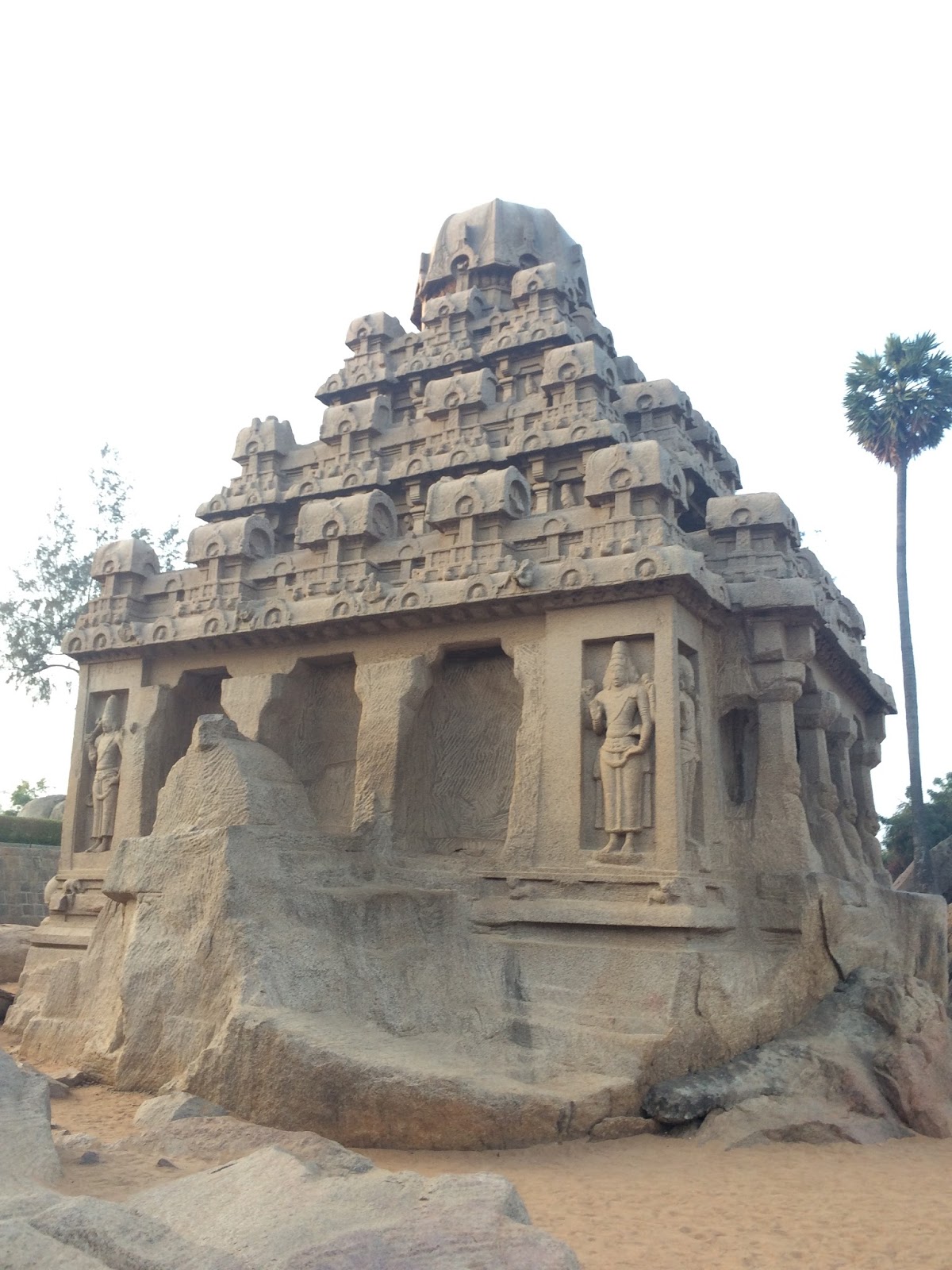
the Pancha Rathas [open 6-6; 500 rupees for foreigners), where I purchased a
ticket to the series of monuments and walked among temples featuring humans and
set amidst boulders. Each were carved from a single large rock in the 7th
century and rediscovered only 200 years ago.
A single life-size baby elephant figure, when faced head on, appeared to
be moving it’s large and bulky body towards me. I could imagine it moving on an
ancient street.
From Pancha
Rathas, I walked up the light house for a view across the boulders and the
greenery over the town and to the sea beyond.

From there I
visited the 8th century sandstone Shore Temple, located on the
shoreline. Nearby, people streamed onto
the beach on the weekend morning, adding color to the pale blue water, the
beige sand and the grey-blue sky with the rainbow brush stroke of colorful
clothing.

My favorite monument is Arjuna’s Penance, a stunning wall
of carved stone that is both a work of art and an amazing human accomplishment.
Stone women carry jugs on their heads,
children grasp the hands of their elders, a tall man stretches high, another
wraps his arm around the shoulders of an elder. Someone milks a long-horned
cow, a calf nearby. One elephant follows
another. Scenes that could take place today just as much as when the sculpture
was created.

My final
stop was the Ganesha Ratha park area, which includes Krishna’s butter ball, a
giant stone that looks like it is about to roll on top of the strollers and
picnickers that fill the park on weekends.
This is a nice place to rest or to people watch as families stroll or
relax in the park.

Dhakshina
Chitra is an ethnographic museum located north of Mahalbalipuram, making it a
convenient place to stop on the way to or from Chennai. Upon paying admission
(250 rupees for foreign visitors), an introductory movie in English provides
some preliminary information about South India.
Then you can stroll the open-air facility, walking into exhibits as you
wish, while feeling like you are stopping in at a neighbor’s house.
The main
attraction is the collection of houses that show the living conditions in Tamil
Nadu and Kerala by religion and type of occupation. Many houses incorporate traditional set-ups
and furnishings, or display typical objects. Most offer the option of an
activity you can try for a small fee, such as weaving a small basket or
decorating a handkerchief with block printing. One of my favorites was the
weavers home, where a man demonstrated weaving on a giant loom. The
informational signs said that weavers typically did their work in the living
areas, then stored the equipment at night. It was impressive to imagine taking
out and putting away such a massive contraption every day. Another favorite was
a circular coastal home, unlike any living structure I’ve seen before. It has a round, protected nucleus, a
safeguard from the monsoons, then a second ring covered by the thatched roof.
Typically, the residents would sleep outside.
In addition
to the exhibits, the facility includes a live performance area, a craft bazaar,
a playground, restaurant and art gallery, making it easy to spend several hours
there. It is a popular place for local families.
·
The
Mahabalipuram beach
Visit early
on a weekend morning and you’ll see people streaming onto the beach. It is an interesting place to people
watch. Many vendors nearby sell cut
fruit and food from carts. In addition
to the main beach, there are areas further north and south where you can access
the beach.
·
Local
resorts
I have
stayed at the Intercontinental and the Grande Bay Mahabalipuram. Both offer a tranquil retreat space, as well
as a variety of local activities, including yoga.
Facts:
·
Additional
local attractions that I haven’t had the chance to explore, but may be worth
visiting include: the seashell museum, crocodile bank, tiger caves, Vishnu
temple, Varaha caves and Mahishasura Mardini cave.
·
Other
things to do in town include ayurvedic massage and yoga. A center for serious students of yoga is
Ph: 2744 2184; cell: 096772 97545;
samanandayoga@gmail.com; 10/B 2nd cross Street, Venpurusham, Near Five Rathas,
Mamallapuram – 603104).
Recommendation: Try to visit the monuments in the earning
morning or late afternoon for the coolest temperatures and the best light.
Cost: 500 rupees
to visit the monuments.
Kid-friendly: Yes
Things to keep in
mind:
Travel
to Mahabalipuram is quicker if you arrive on a late night flight (when traffic
is light).


